









I booked my first navy blue manicure on a whim — it was late October, I was feeling dramatic, and every other color suddenly felt wrong. The tech at the salon looked at my reference photo, nodded slowly, and said something I didn’t fully appreciate until later: “This one takes patience.” She wasn’t being precious about it. She was warning me. Three sessions and one genuinely humbling conversation with a nail educator later, I finally understand what she meant — and I think every person who’s ever screenshot a navy set deserves to know it too.
Where the Style Actually Comes From
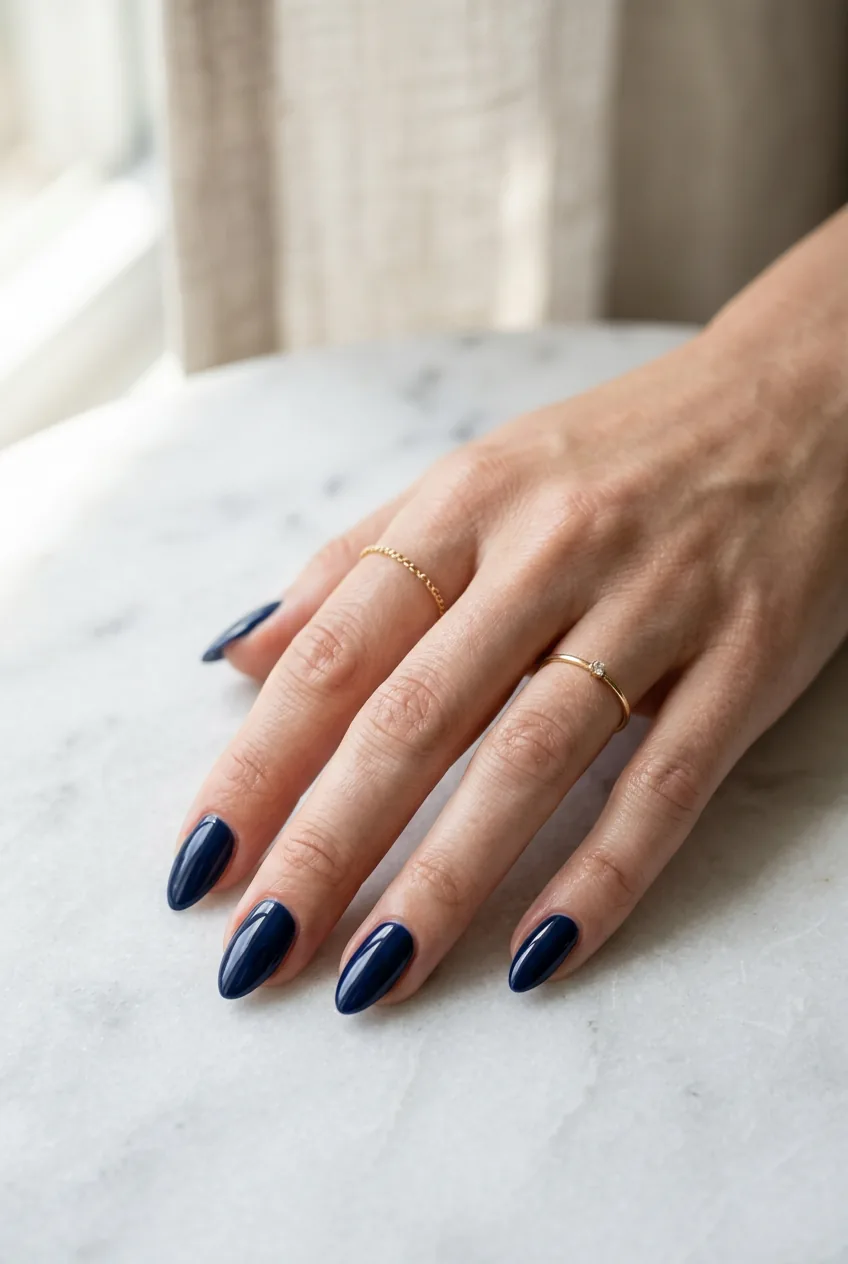
Navy as a nail color has a longer history than most people assume. It didn’t appear out of nowhere on a mood board in 2019. Deep, saturated blues — bordering on midnight, bordering on black — show up in fashion and beauty archival records as far back as the 1940s, when dark lacquers were considered the sophisticated alternative to the era’s dominant reds. The visual logic was the same then as it is now: navy reads as refined without being cold, bold without being aggressive.
The modern resurgence has a clearer lineage. When Chanel released “Blue Satin” and later darker iterations in their Le Vernis line, it gave permission to the mainstream market. Suddenly navy wasn’t a niche choice for women who wanted to look vaguely mysterious — it was in Vogue editorials, on runway hands, on celebrities at red carpet events. The color had cachet again.
What I find genuinely interesting — and what most Instagram posts skip entirely — is that navy sits in a complicated chromatic zone. It’s dark enough to read as almost black in low light, but in daylight it reveals unmistakable blue depth. That duality is exactly what makes it so wearable across seasons. I’ve worn mine to job interviews and to parties on the same week, and nobody questioned either. If you want to explore the full spectrum of what dark blues can do, the 12 best blue nails of 2026 is genuinely one of the best references I’ve found — it shows just how much range lives within this color family.
There’s also a seasonal argument worth making. Navy travels brilliantly through autumn and winter — the pigment just looks right against wool coats and cashmere — but it holds its own in summer too, especially in sheer or jelly formulas that give it a translucent, deep-sea quality. The color isn’t seasonal. The formula is. That distinction matters when you’re deciding what to ask for.
The Application Reality Nobody Posts About
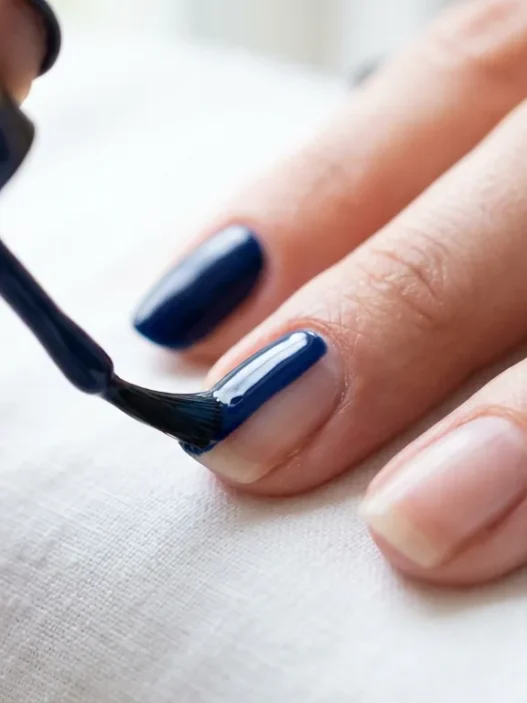
Here’s the thing nail techs will tell you if you ask — but usually don’t volunteer unprompted: navy is one of the most technically demanding colors to apply cleanly. Not because the pigment is difficult to work with on its own, but because of the margin for error. On a pale or neutral polish, a slightly uneven edge reads as imprecise. On navy, it reads as sloppy. The contrast between the deep color and the skin around your cuticle is unforgiving.
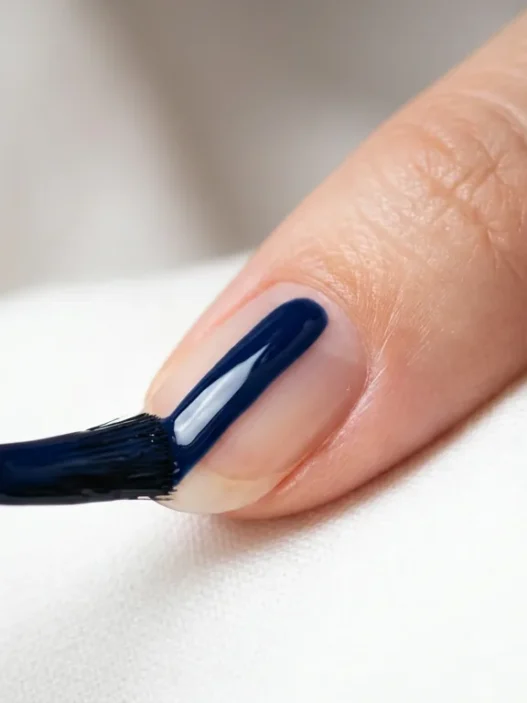
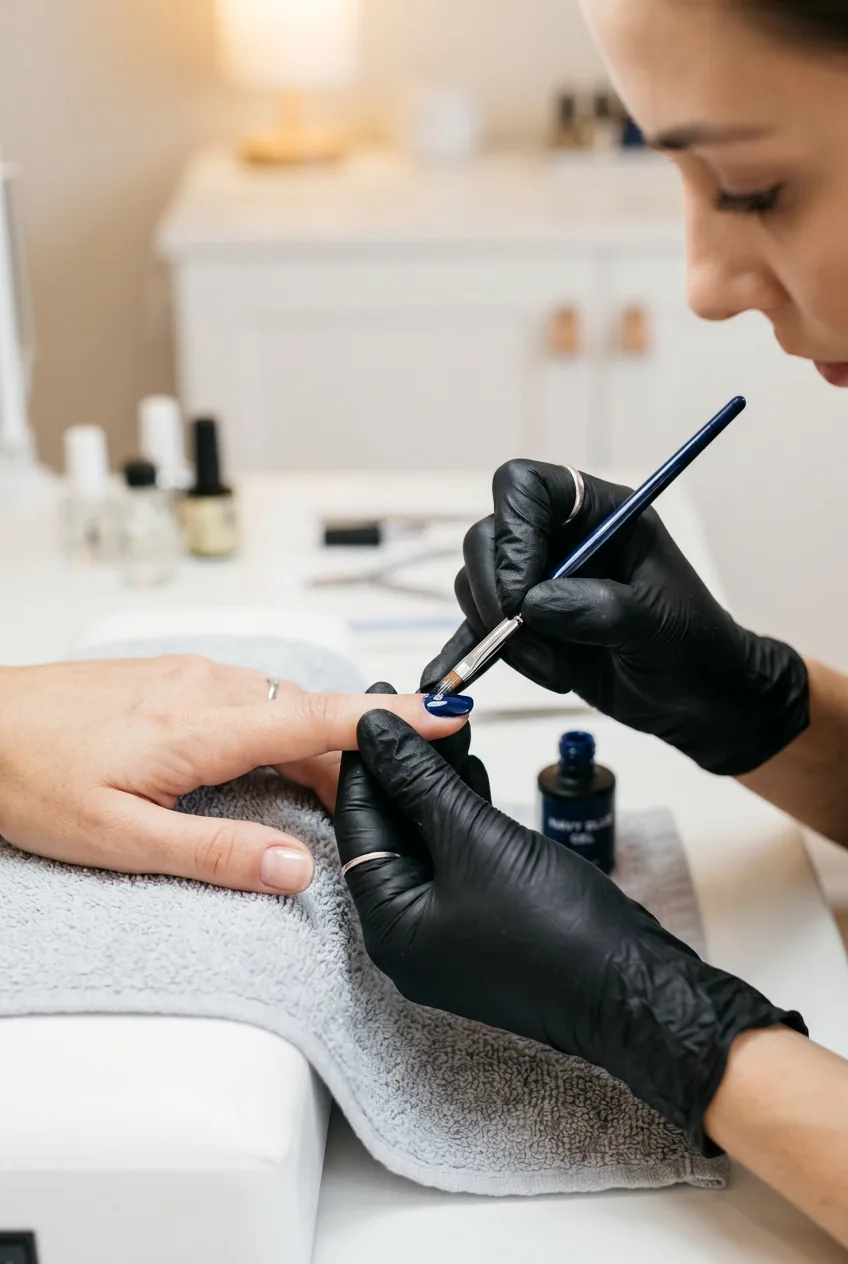
Most high-quality navy polishes require a minimum of two coats, and frequently three, to achieve the kind of flat, opaque finish that photographs well and looks intentional in real life. Thin, watery formulas can require four coats, which compounds the application time significantly and increases the risk of flooding the cuticle line. A skilled tech manages this by using slightly less product per coat and allowing each layer to settle before adding the next. It sounds simple. It adds meaningful time to your appointment.
Streak-free dark polish application is something I’ve watched tutorials on for years, and the honest takeaway is this: it’s a practiced skill. The brush pressure, the starting point on the nail, the way you pull toward the free edge — all of it matters more with saturated darks than with any other color category. When a tech makes it look effortless, that’s craft, not luck.
Gel formula adds another layer of complexity. Navy gel has to cure thoroughly without shifting color under the LED lamp — some blue pigments are notoriously lamp-sensitive and can read slightly purple or greenish after cure. A knowledgeable tech will test their specific gel brand under their specific lamp before committing to your full set. If they don’t mention this and you end up with a vaguely purple result you didn’t ask for, that’s not a conspiracy — it’s a formulation mismatch that a better tech would have caught in advance.
The cleanup step — removing any color that’s migrated onto the skin around the nail — is where the finished set lives or dies. With navy, every stray molecule of pigment is visible. Techs use a fine brush dipped in pure acetone and work with precision around each cuticle after the color coats are applied. If you’ve ever left a salon thinking your navy set looked perfect and then examined it in natural light at the car and found ragged edges — you now know what step was rushed.
How These Wear in Real Life
Navy gel wears beautifully. I’ll say that plainly because I think people expect dark colors to show every chip and scratch, when actually the opposite tends to be true — chips on dark polish are less visible than chips on pale pink, because you’re not looking at a stark contrast between color and bare nail. What you do see on navy, more than almost any other shade, is tip wear. The leading edge of the nail dulls and lightens slightly as the color thins, and on a dark shade like this, that transition is perceptible. A good top coat applied at the full appointment and then refreshed at home around day seven makes a significant difference.
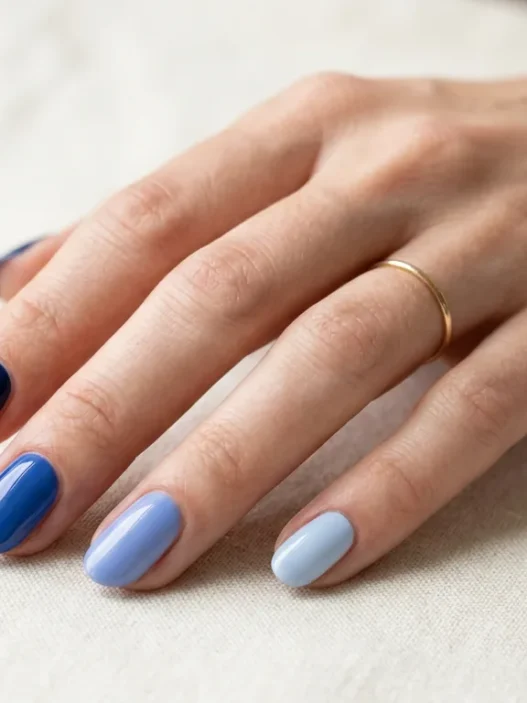
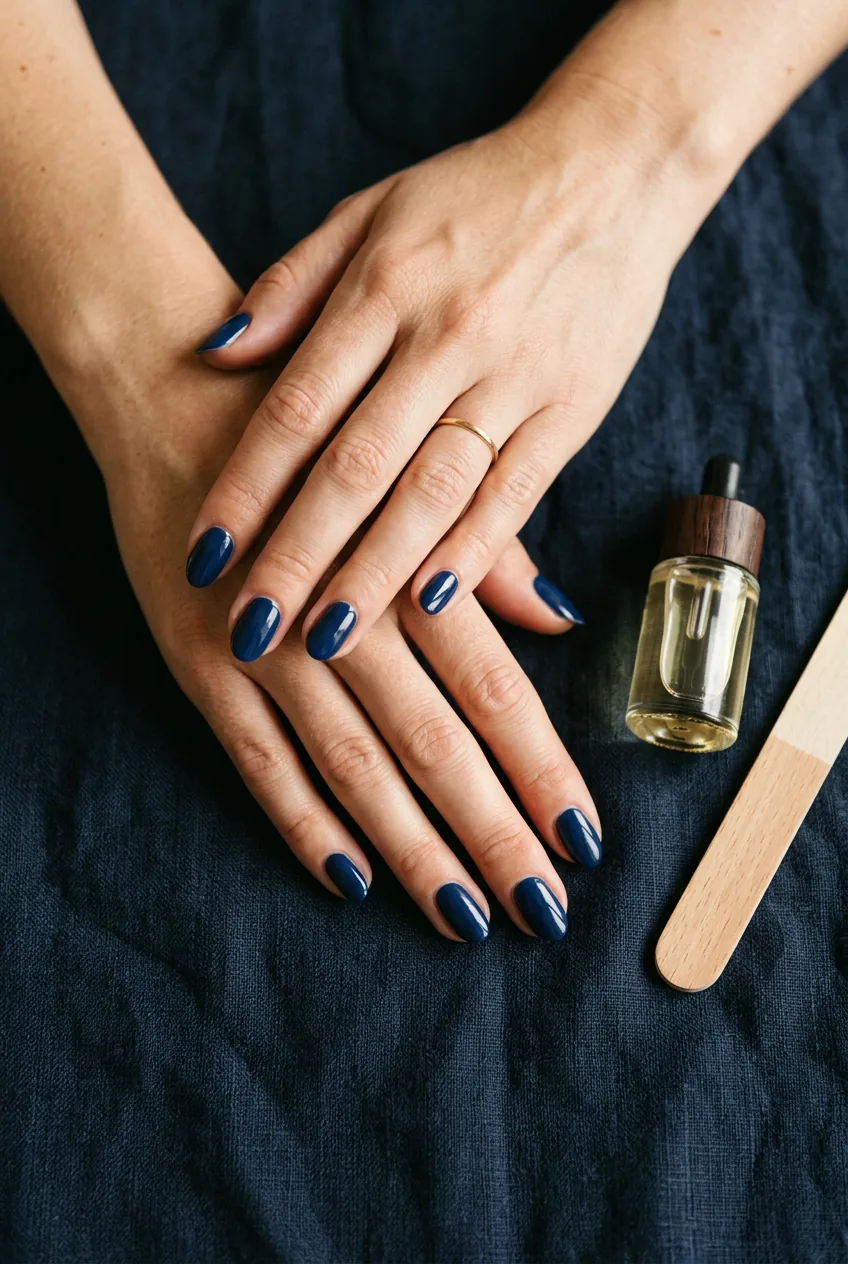
Look at the way the nails in this photo catch the light — that even, slightly glossy finish across all ten nails is the result of a quality top coat sealed past the tip, not just painted across the surface. That detail is easy to skip when you’re trying to move fast, and it’s the first thing that betrays a rushed application.

Longevity in gel formula typically runs two to three weeks before you’ll notice meaningful tip wear or lifting at the cuticle end. If you’re doing a lot of manual work — typing heavily, cooking, handling packaging — the lower end of that range is realistic. If your lifestyle is gentler on your hands, three weeks with a home top coat refresh is genuinely achievable. Regular nail polish, even with a strengthening base, will likely give you five to seven days before chipping becomes noticeable, simply because the formula isn’t as durable.
One thing worth noting: navy stains. Not your nails (a good base coat prevents that), but your cuticle skin slightly if the color sits against it for weeks. This is common with deeply pigmented polishes across all dark shades, not just blue. Using a cuticle oil daily and keeping the skin moisturized helps. If you want a deeper read on seasonal care and what navy looks like across different times of year, the archives for winter nails and fall nails both have great examples of how the color shifts in feeling depending on season and finish.
The Pricing Reality Nobody Talks About
Unpopular opinion incoming, and I stand by it completely: if your navy gel manicure costs the same as a nude one at the same salon, someone is either rushing the dark set or undercharging for the skill involved. They are not the same service. The application complexity is higher, the cleanup is more detailed, the margin for error is narrower — and a good tech knows this.
Some salons build this into tiered pricing by color category or complexity. Many don’t, because clients push back when they see line items on the receipt that weren’t in the base price advertised online. The result is that techs absorb the extra time into their workflow, which means either the service is rushed or the tech is losing money. Neither outcome is good for you as a client.
What’s a fair range in 2026? For a gel manicure in a mid-range urban salon, I’d expect anywhere from $55 to $85 for a solid dark color with thorough cleanup and a quality top coat. At a high-end nail studio with an experienced specialist, $90 to $130 isn’t unusual and is often worth it — the precision work at the cuticle line alone justifies the difference. Budget salons that offer gel nails at $35 to $40 flat can produce beautiful results, but the statistical likelihood that your navy set gets the cleanup attention it needs is lower. That’s not a judgment — it’s math. Time is finite.
Tipping on a technically demanding set is something I feel strongly about. If your tech spent 20 extra minutes making sure your edges were clean and your third coat was properly set, that deserves acknowledgment. Twenty percent is the floor. I know that’s not a universally comfortable opinion, but I’ll keep having it.
What Changes Between Your First and Fourth Session
Your first navy manicure and your fourth are genuinely different experiences, and the difference is mostly on your end. By the fourth session, a good tech knows your nail shape, knows how your cuticles behave, knows whether you tend to get lifting on your ring finger specifically (this is weirdly common). They’ve mapped your hands. The set goes on faster, looks better, and lasts longer — not because the product changed, but because the application is tailored now rather than calibrated.
Your first session is really an information-gathering exercise for both of you. You learn whether you prefer a cooler, more midnight navy or a slightly warmer, almost ink-toned version. You learn how the color looks on your specific skin tone in your specific lighting. I have warm olive skin, and when I first tried a cooler blue-navy it looked slightly disconnected from my hands — almost like I was wearing someone else’s manicure. Switching to a warmer, more saturated formula changed everything. That’s a discovery that only comes from the first try.
Between sessions, the maintenance habits you build matter more than most people expect. Cuticle oil benefits are well-documented — daily oil application keeps the skin flexible around the nail plate, which reduces lifting and extends the life of the gel. It’s the single highest-return habit in nail care, and it costs almost nothing. I use mine every night before bed and it’s made a visible difference in how my sets look at the two-week mark.
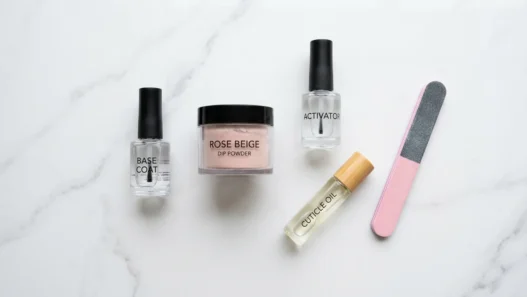
If you’re interested in doing a version of this at home between salon visits — for touch-ups, or just to experiment with the color before committing to a full professional set — the guide on the professional-grade blue nails manicure you can do yourself is the most practical breakdown I’ve found. It doesn’t pretend the results will be identical to a salon, but it’s honest about what’s achievable at home with patience and the right tools.
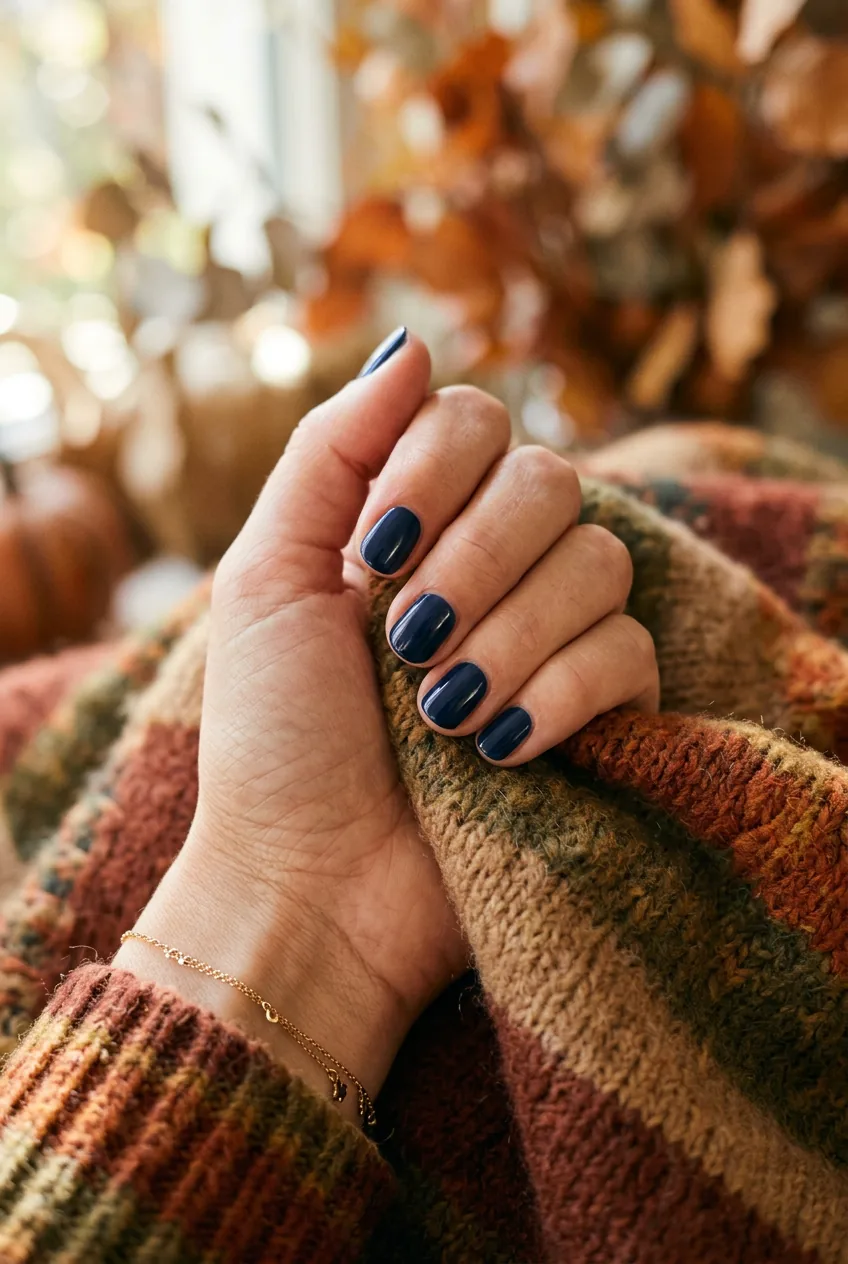
By your fourth session you’ll also have strong opinions about nail shape, which I think is one of the underrated pleasures of committing to a signature color. Navy reads very differently on a short oval versus a longer almond or coffin shape. The color has enough visual weight that it can handle length — it doesn’t shrink or disappear the way some nudes do on longer nails. If you’ve been curious about growing yours out, a dark anchor color like navy is actually a smart transitional choice because it keeps the look intentional while your natural nail does its thing. And if you want to see what this color does across different nail trends right now, summer nails has some surprising takes on navy that I genuinely didn’t expect to love as much as I do.

Questions I Get About This
Will navy blue polish stain my natural nails?
It can, if you skip a base coat. The deep pigment in navy is genuinely staining, similar to dark red and black polish. A good rubber base coat creates a barrier between the pigment and your nail plate — apply it before any color coat, every single time. If you’re using gel, your tech should be doing this automatically; if they’re not, it’s worth asking.
Is navy blue a good choice for short nails?
Honestly, yes — and I think this fear is overblown. Dark colors on short nails look intentional and graphic, not overwhelming. A clean, well-shaped short nail in navy reads as chic, not heavy. The key is keeping the nail shape tidy; a rounded or oval edge softens the look if you’re worried about it feeling too severe.
How do I find the right shade of navy for my skin tone?
Warm skin tones (olive, golden, or bronze undertones) tend to look best with navies that have a slight warmth to them — think ink-blue rather than bright cobalt-navy. Cooler or neutral skin tones can pull off the cleaner, truer blue-navies without any disconnect. The easiest test: look at the polish bottle in natural daylight before committing. If it looks purely cool blue with no depth, it’ll read sharper against warm skin.
Can I wear navy nails to a professional setting?
Absolutely. Navy sits in a genuinely useful middle ground between neutral and statement. It’s dark enough to read as polished and restrained, but has enough personality that it doesn’t disappear. I’ve worn navy gel nails to client presentations, formal dinners, and job interviews with zero internal debate about whether it was appropriate. It always is.
Navy blue is one of those rare colors that rewards the people who understand it. The more you know about how it’s applied, how it wears, and what to ask for, the better every set gets. Your nail tech already knows all of this — now you do too. Go book the appointment.