






I have a complicated history with stiletto nails. The first time I got them — real, dramatic, dangerous-at-a-keyboard stilettos — I was both terrified and completely obsessed. That’s the thing about this shape: it demands attention. But what I didn’t realise until I’d been down the nail rabbit hole for a few years is that the design you put on a stiletto matters just as much as the shape itself. The wrong art on the wrong nail proportions can make your fingers look stumpy or chaotic, while the right pairing? Chef’s kiss. So here are the 10 designs I’d actually recommend — sorted by the shape you’re starting from.
Your Shape, Your Stiletto: Jump to the Design That Fits
- 1. For Classic Stiletto Tips: Midnight Chrome
- 2. For Classic Stiletto Tips: Negative Space Geometric
- 3. For Classic Stiletto Tips: Crimson Ombre Fade
- 4. For Almond-to-Stiletto Transition: Sheer Nude With Gold Tip
- 5. For Almond-to-Stiletto Transition: Soft Watercolor Florals
- 6. For Long Coffin Edges Filing to Stiletto: Marble With Black Veining
- 7. For Long Coffin Edges Filing to Stiletto: Jet Black With Micro Glitter Tips
- 8. For Squoval Filing Up to Stiletto: Pastel Gradient
- 9. For Squoval Filing Up to Stiletto: Bold Neon Swirls
- 10. For Shorter Stilettos (Yes, They Exist): Glazed Donut Sheen
1. For Classic Stiletto Tips: Midnight Chrome
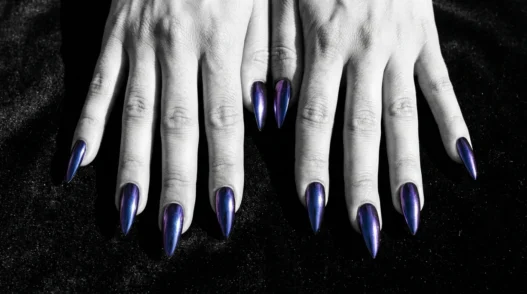
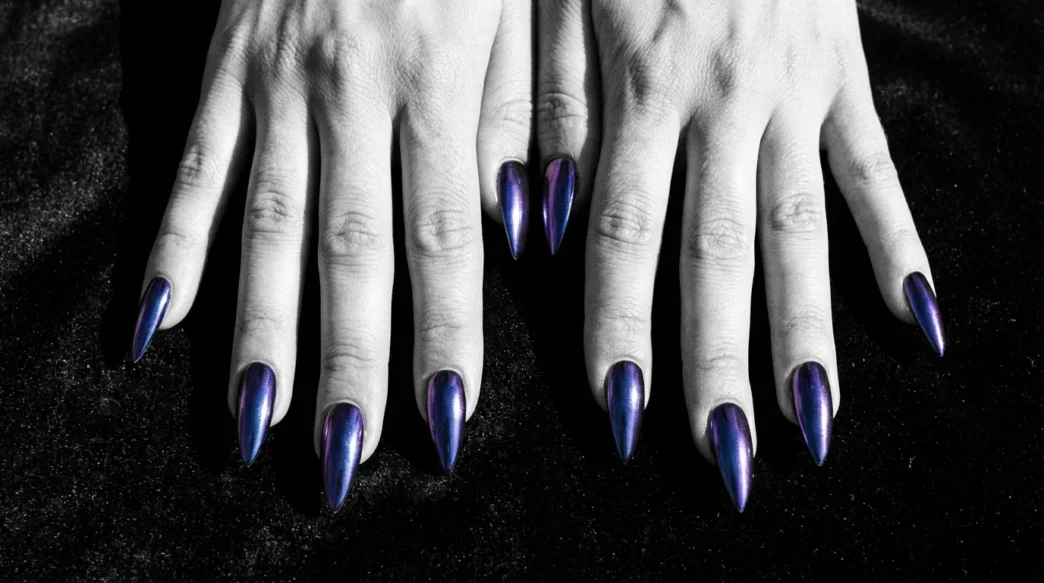
If you’re already rocking a full-length stiletto — I’m talking 2.5 inches of filed acrylic or gel, true point, no compromises — then midnight chrome is your design soulmate. The reflective surface catches every angle of that fierce tip and turns it into something almost architectural. The dark base reads as black in low light and shifts to deep cobalt or purple under flash, which is exactly the kind of drama this shape was built for.
The reason this works so well on a true stiletto specifically? The chrome finish needs length to really travel and shimmer across the nail bed. On shorter shapes it can look like a blurry smudge. But on a long, sharp point? It pulls the eye right to the tip and makes the whole finger look impossibly elegant. My nail tech applies it with a chrome powder over a cured gel base — you can read up on the process through a solid gel manicure guide before your appointment so you know what to ask for.

Seeing Chrome Powder Applied in Real Time
2. For Classic Stiletto Tips: Negative Space Geometric
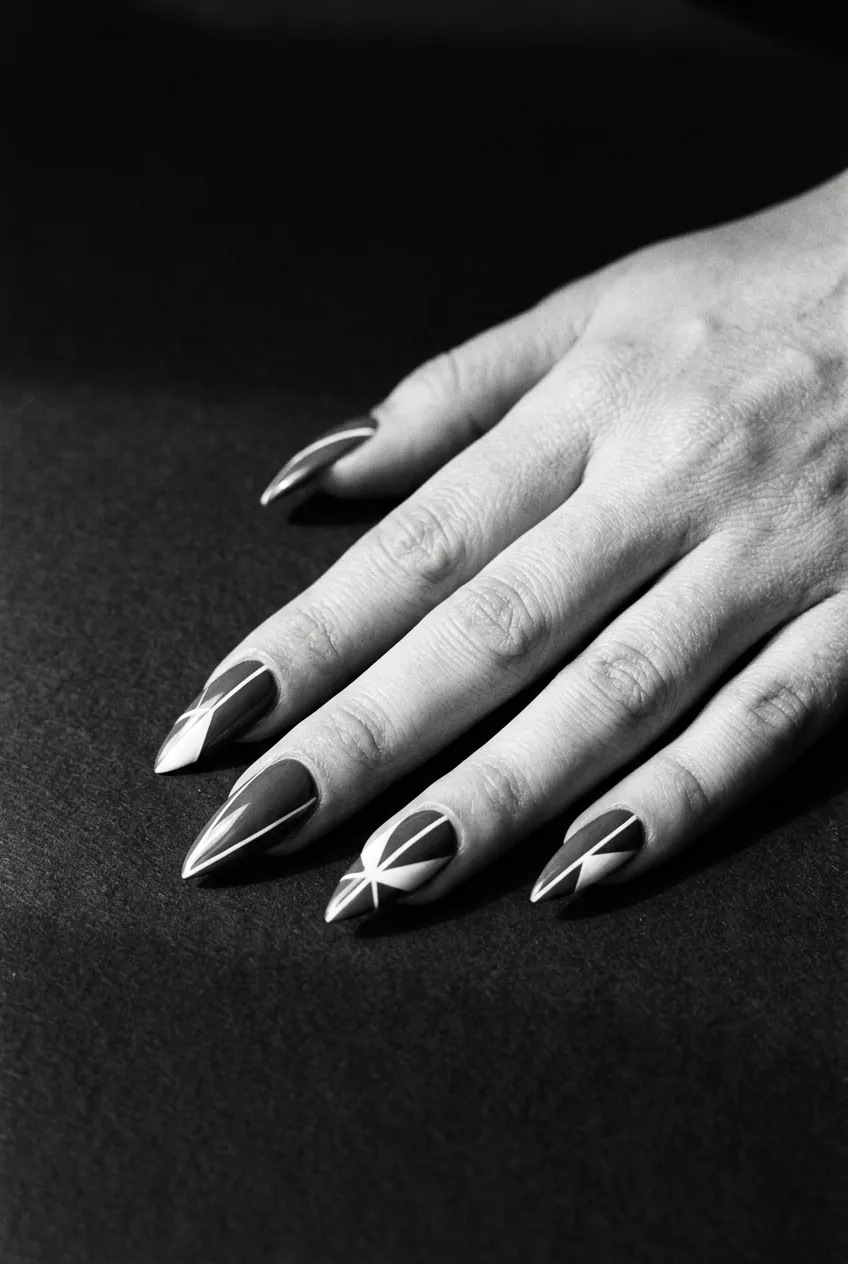
Hear me out on this one. Negative space designs — where strips of bare (or nude-coated) nail show through angular shapes — feel almost counterintuitive on a stiletto. Shouldn’t you fill all that canvas? But that’s exactly why it works. The contrast between the empty space and the geometric lines creates a tension that makes the sharp point look intentional rather than just long.
Triangles and sharp diagonal lines are the obvious choice because they echo the shape of the nail itself. I’ve seen this done in black and gold, in white lines on a smoky base, and even in a deep forest green with the bare nail peeking through at the sides. It’s a design that rewards detail work, so this is one I’d ask your artist to freehand rather than use a stamping plate — the slight imperfection reads as intentional art.
3. For Classic Stiletto Tips: Crimson Ombre Fade
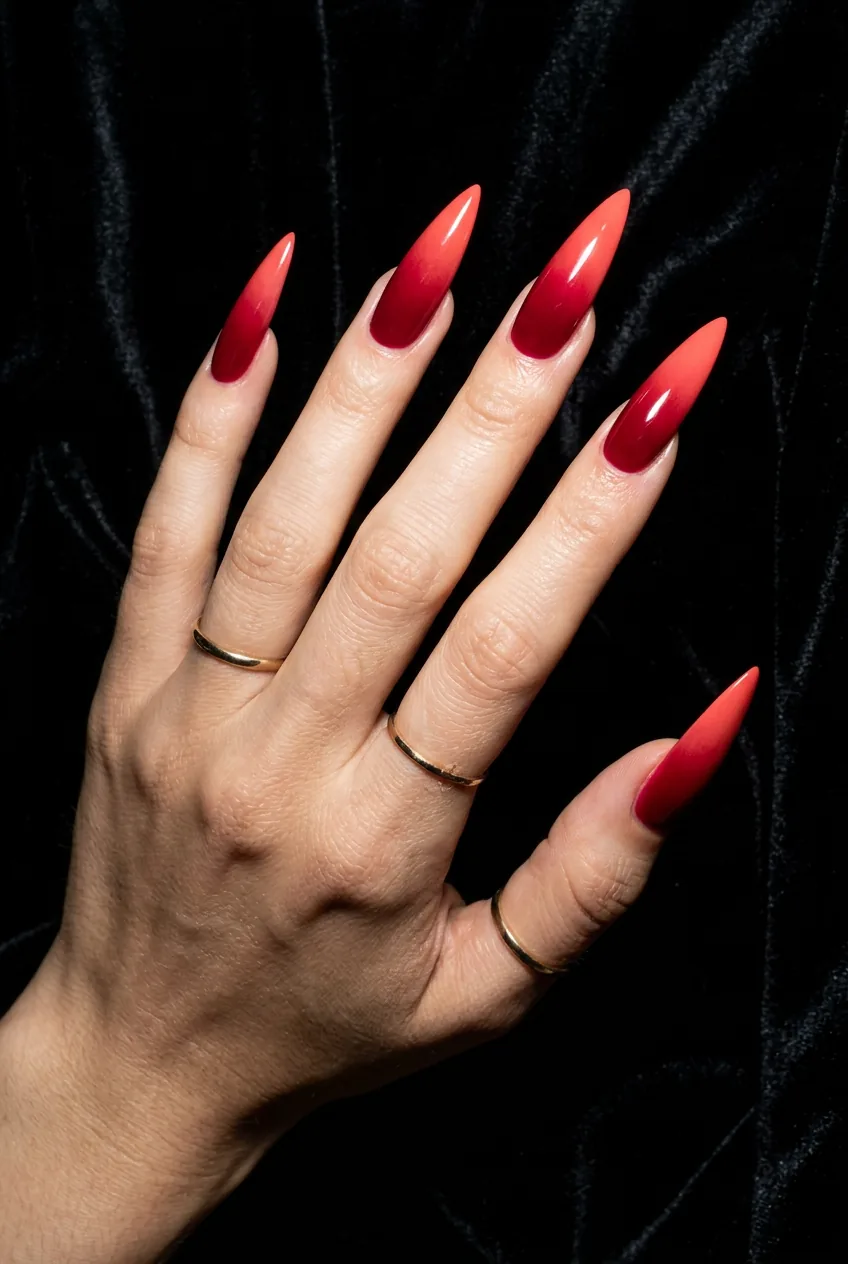
This is one of those designs that photographs almost aggressively well. A deep crimson at the cuticle that fades through cherry to a near-coral at the tip — or reversed, if you want something more unexpected. The ombre technique uses every millimetre of length to tell a colour story, and stilettos have more real estate than any other shape to make that gradient sing.
Red is having a major moment in 2026 anyway, but this isn’t your grandmother’s red nail polish situation. The gradient softens it into something wearable for someone who loves drama but doesn’t want a full-on power-red nail. You can even check out how ombre nail gradients work before you go, so you can describe exactly what you want without spending ten minutes flipping through your tech’s Instagram.
4. For Almond-to-Stiletto Transition: Sheer Nude With Gold Tip
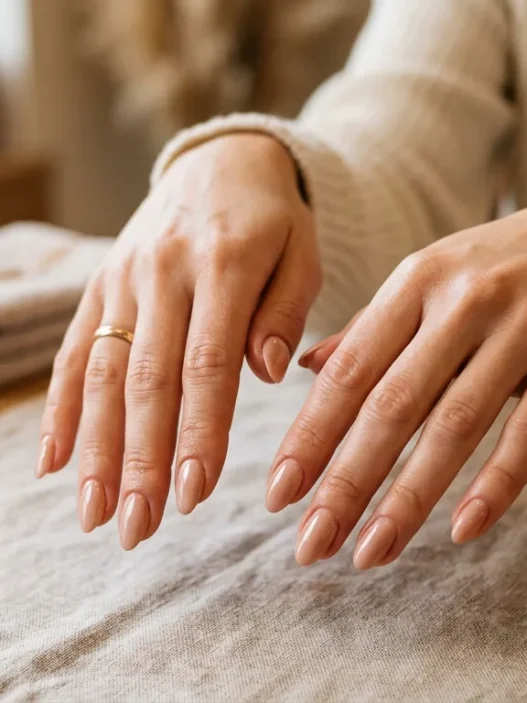
So you’ve got almond nails — lovely, classic, perfectly respectable — but you’re eyeing the stiletto shape and not quite ready to commit to the full point. Maybe you’re filing your existing almond just a touch sharper, or your tech is slowly transitioning the shape over a few fills. Either way, this design is your best friend right now.
A sheer nude base keeps the nail looking elongated and clean — crucial when you’re in transition and the shape isn’t quite at peak drama yet. The fine gold tip (think a very thin, precise line rather than a chunky French tip) adds definition to the point and makes it look more deliberate. More stiletto than “almond that got a bit aggressive with a file.” I’ve worn this myself during a transition grow-out and it bought me at least two months of looking intentional.
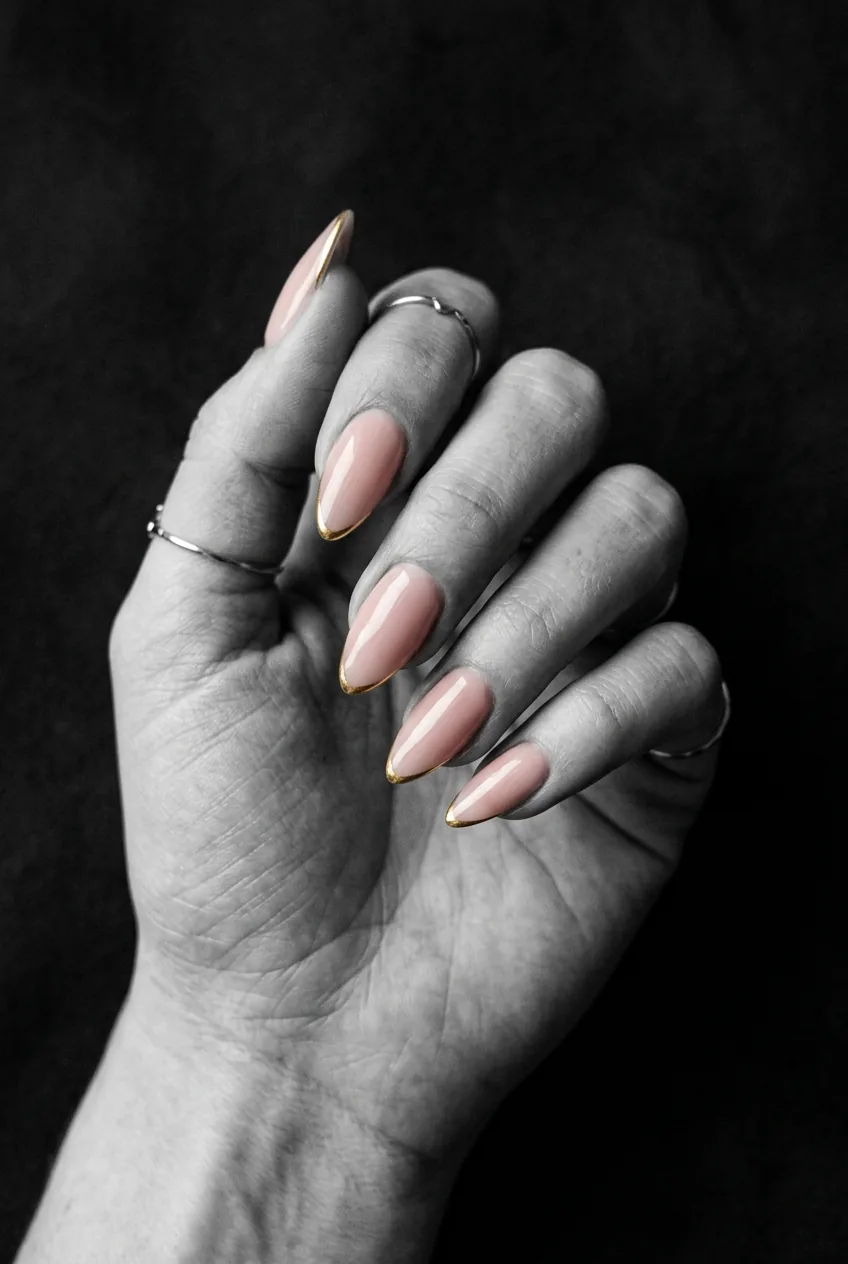
Personal pick: This is the design I always recommend to friends who ask me where to start. It’s the lowest commitment, highest elegance ratio of anything on this list. You can wear it to work, a wedding, or a funeral and you’ll look pulled together every time. The sheer base means if the length snaps — and stilettos do snap — the grow-out is barely noticeable.
5. For Almond-to-Stiletto Transition: Soft Watercolor Florals
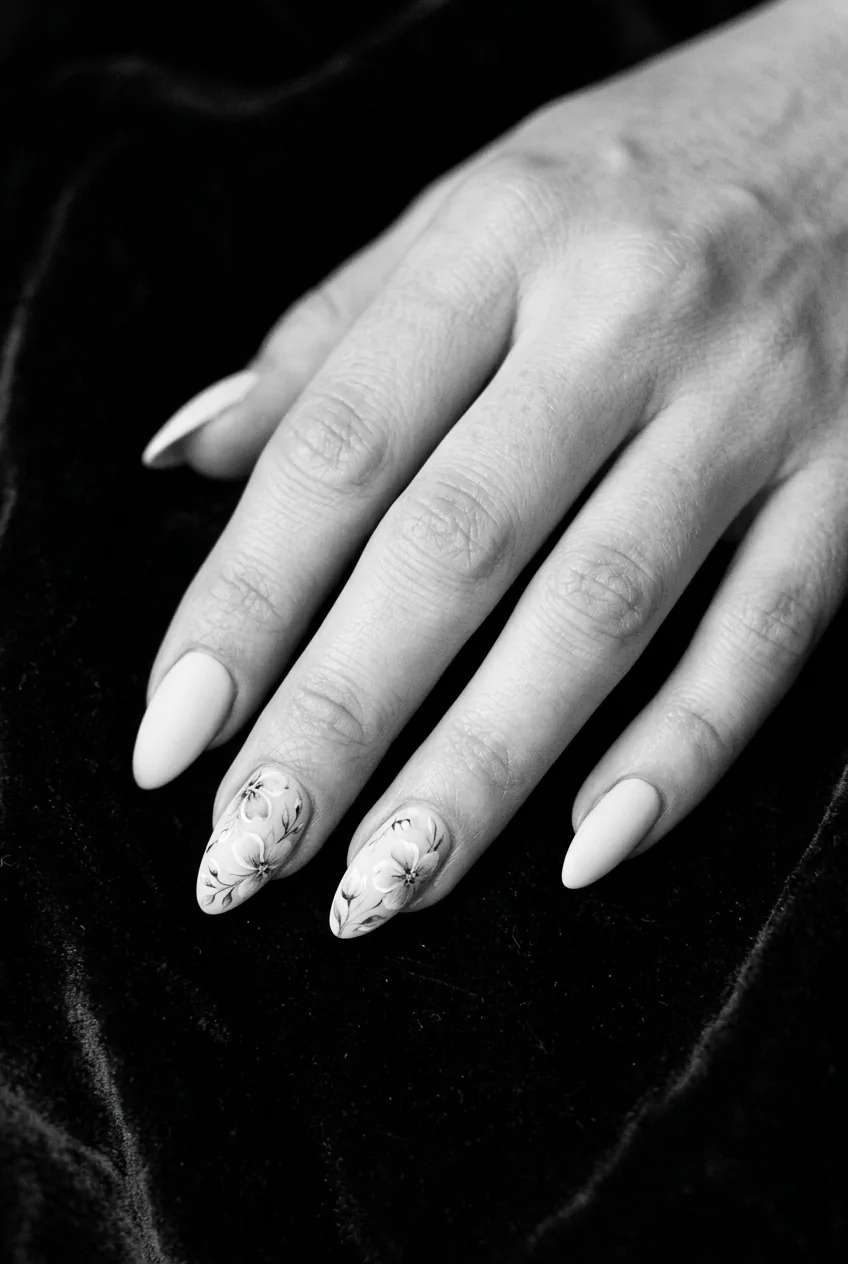
Here’s where being in the almond-to-stiletto transition actually gives you an advantage. The slight roundness still present at the edges of your nail softens the floral design in a way that works beautifully — full stiletto points can make delicate watercolour petals look a bit chaotic because there’s so much sharpness competing for attention.
Soft blush florals, lavender wisps, barely-there white blooms on a cream base. The style is having a quiet comeback in 2026 — not the maximalist botanical everything of a few years ago, but a restrained, editorial take. Look at the photo below: she’s got just two accent nails with florals and the rest in a matching blush. Smart. It lets the shape do some of the work.
6. For Long Coffin Edges Filing to Stiletto: Marble With Black Veining
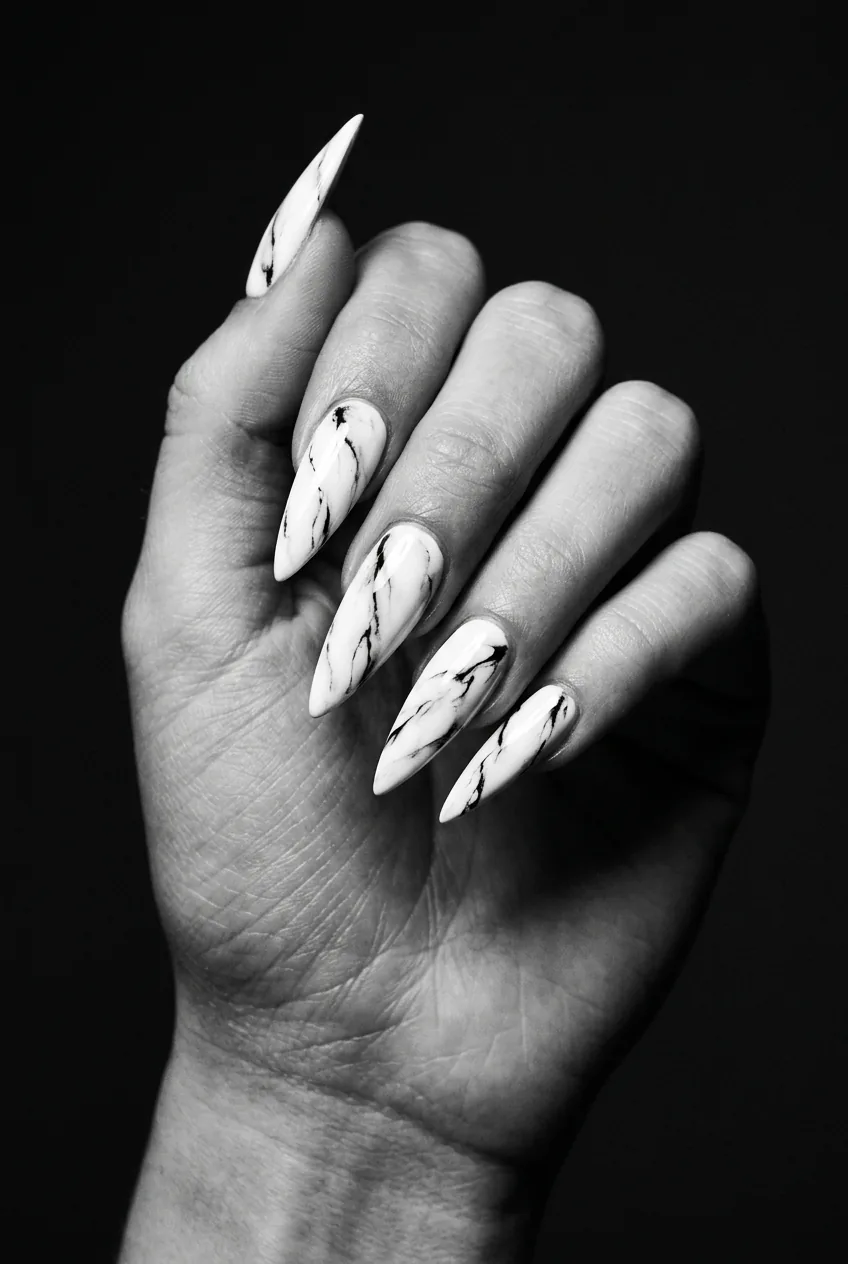
Coffin and stiletto are cousins in the nail world — both need serious length to look right, and many people with long coffin nails have contemplated filing the flat edge into a point at least once. If you’re making that move (or already have), marble with dark veining is the design to reach for.
The reason it translates so well from coffin to stiletto is the vein pattern. On coffin nails, marble veining tends to run horizontally across that wide tip, giving it a broad, almost flooring-tile energy. File to a stiletto point and suddenly those veins converge toward the tip, creating a natural triangular composition that looks completely intentional. The nail shape you choose genuinely transforms how a design reads — and marble is one of the most dramatic examples of that shift.
7. For Long Coffin Edges Filing to Stiletto: Jet Black With Micro Glitter Tips
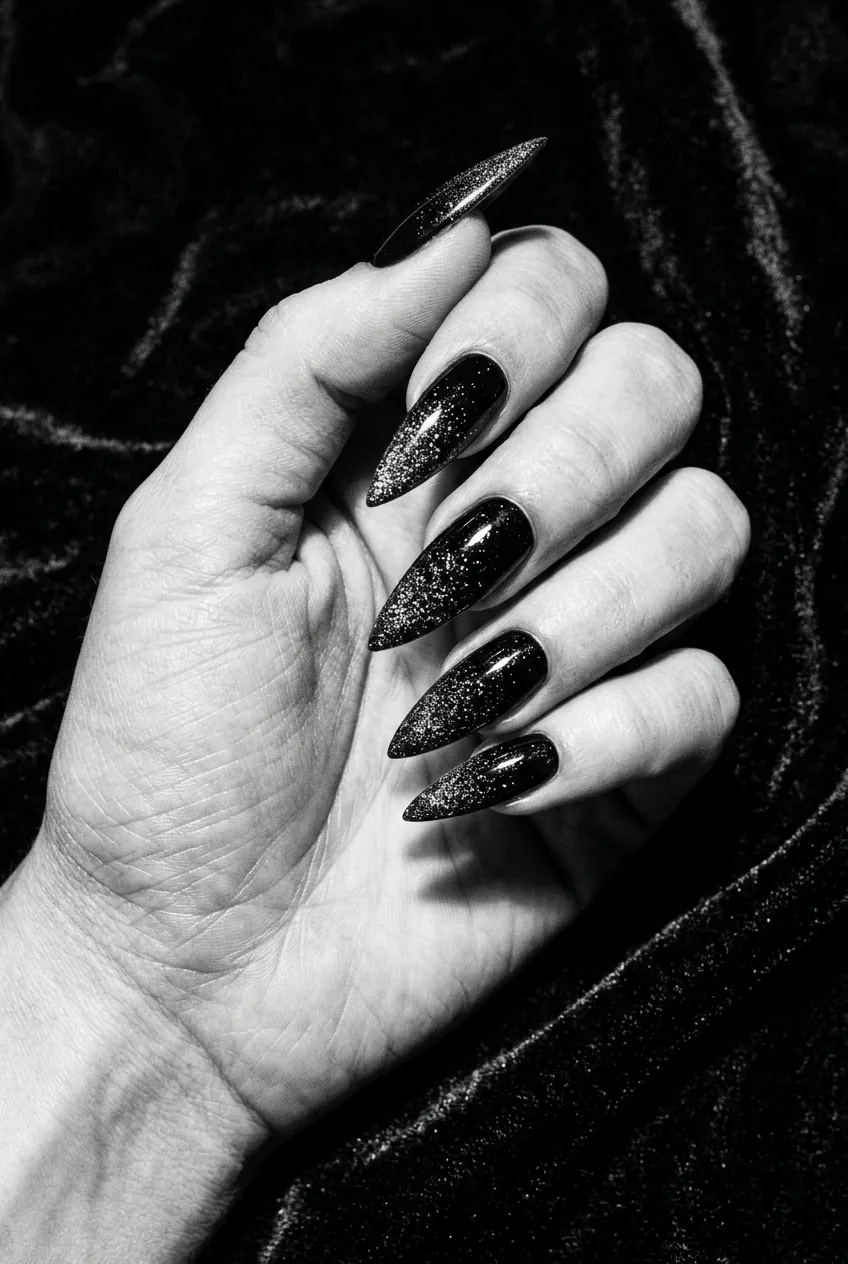
This one is for my people who want the drama all the way up. Jet black — not a dark navy, not a blackened plum, actual black — as the base, with micro glitter concentrated at the very tip of the stiletto point. The effect is like the nail is dissolving into starlight at the end.
What makes this work for the coffin-filing-to-stiletto crowd specifically? When you file down from a wide coffin tip, you sometimes lose a tiny bit of the nail bed’s proportion — it can look slightly narrow at the base relative to the point. A dark base visually slims the overall shape and removes that awkward mid-transition look. The glitter tip draws all attention to the point, which is exactly where you want it.
Fair warning: micro glitter at the tip requires a steady hand or a very patient nail tech. It’s worth asking to look at their portfolio for this specific effect before you commit.
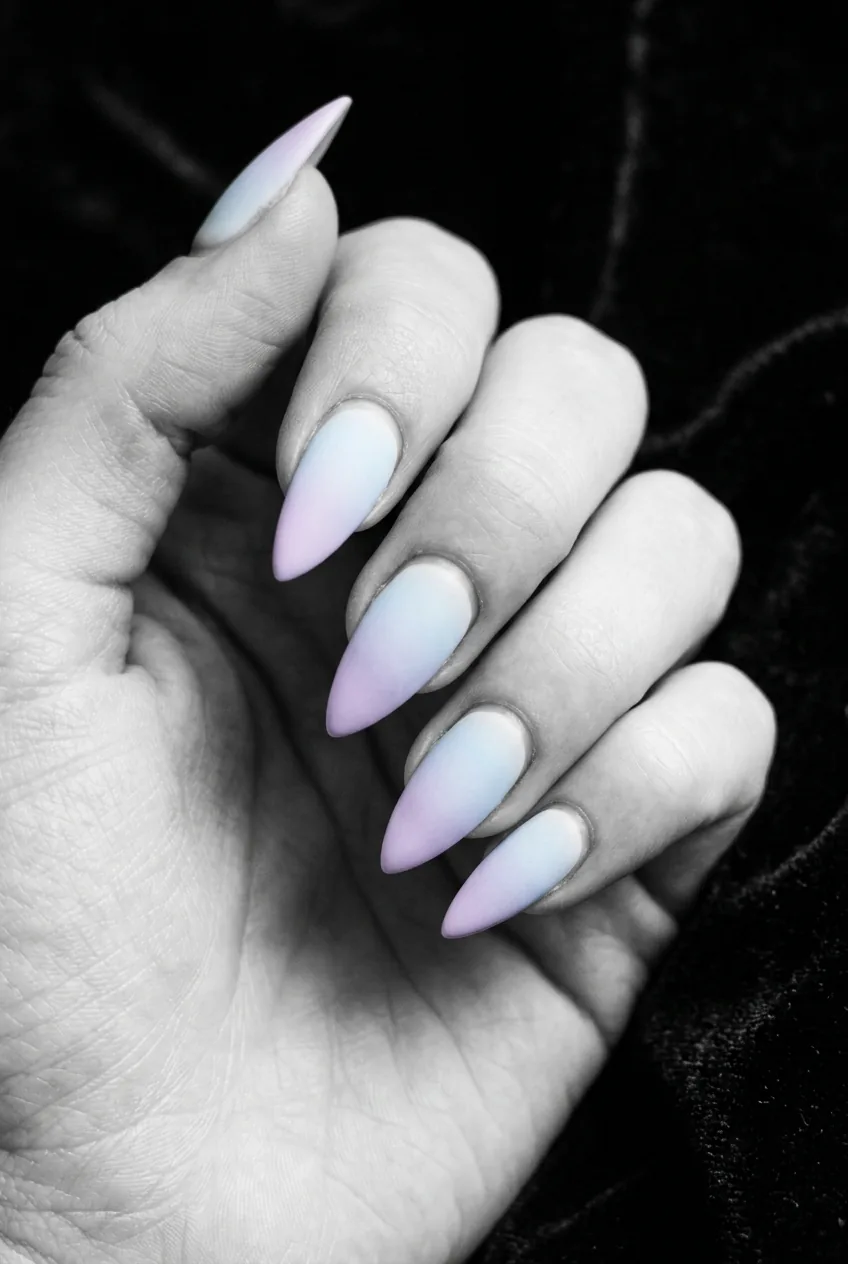
8. For Squoval Filing Up to Stiletto: Pastel Gradient
Okay, so squoval-to-stiletto is the most dramatic shape jump on this list — you’re essentially rebuilding the entire nail profile. Most people do this with acrylics or hard gel extensions rather than filing alone. But once you’re there? The contrast between the soft, girly energy of a pastel gradient and the actual ferocity of a stiletto point is *chef’s kiss* interesting.
Baby blue fading into lilac. Mint into soft peach. The pastels keep it from feeling too aggressive for everyday wear, while the shape tells everyone you mean business. It’s a great option if you’re trying stiletto for the first time and want something that feels approachable. You can always read more about the different ways to explore nail shapes and lengths before deciding how extreme to go on that point.
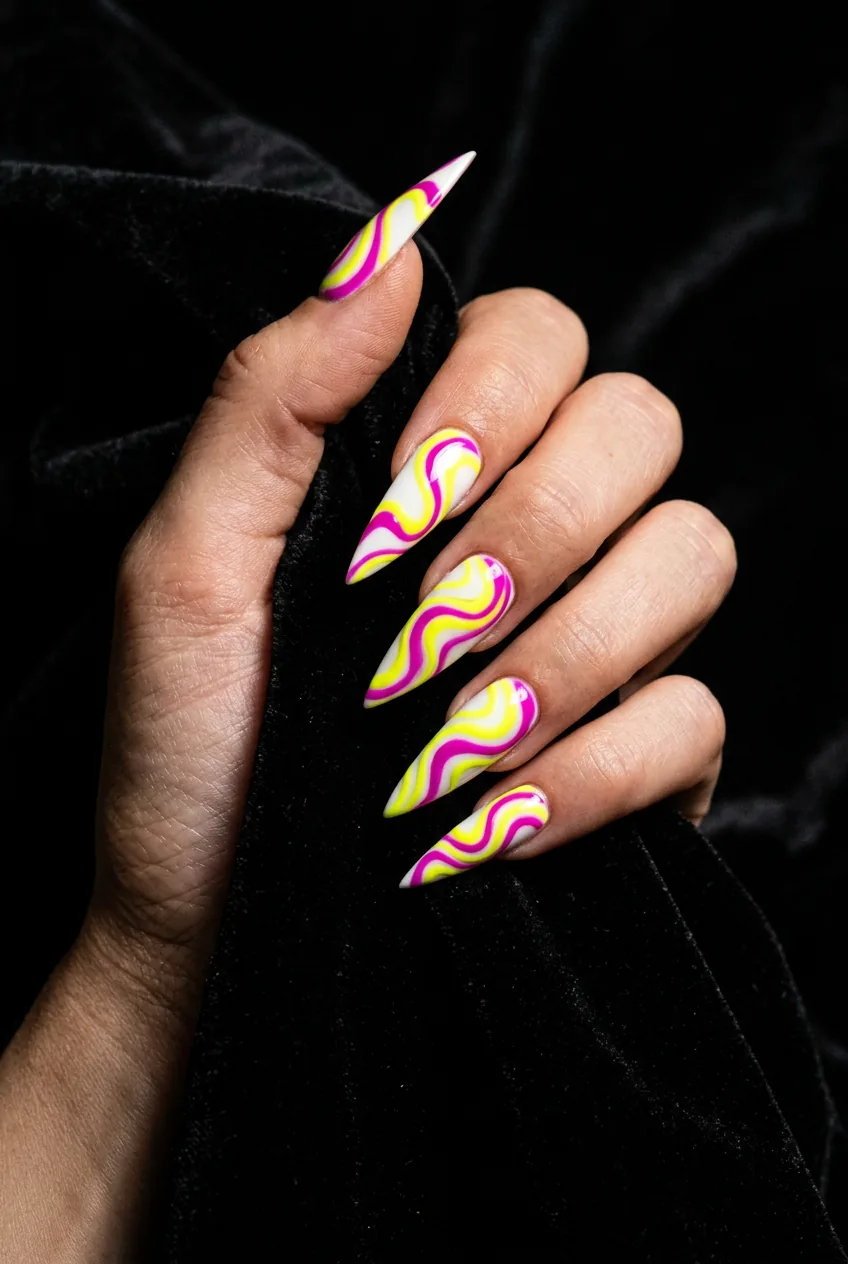
9. For Squoval Filing Up to Stiletto: Bold Neon Swirls
This is not a subtle look. And I love it for exactly that reason.
If you’re coming from a squoval base and going full stiletto, you’re already signalling that you’re not here to blend in. So lean into it. Neon swirls — electric yellow, hot magenta, acid green — on a white or black base, winding from the cuticle all the way to that fierce point. The swirl pattern naturally elongates the nail visually, which helps if your stiletto is on the shorter side of long.
I saw a version of this recently that used UV-reactive neon ink, meaning the swirls glow under blacklight. For anyone planning a summer festival or a night out in 2026, I cannot think of a better nail moment. You can also dig into neon nail swirl technique if you’re attempting this at home — the brush control matters more than you’d think.
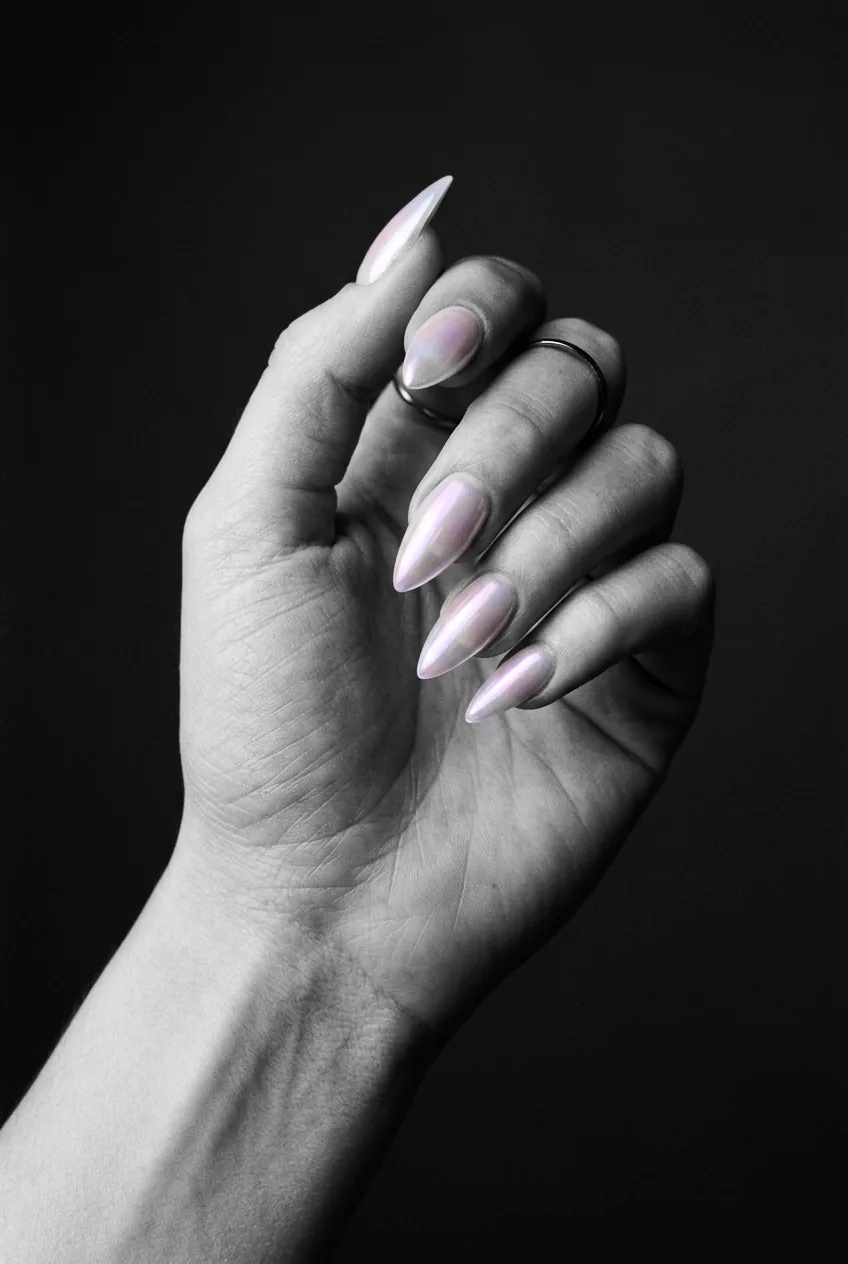
10. For Shorter Stilettos (Yes, They Exist): Glazed Donut Sheen
A shorter stiletto is still a stiletto. The point is the point — literally. If your nail bed is naturally short, or you broke a nail and had to file back, or you just don’t want to deal with full-length acrylic tips, a medium-length stiletto with a glazed finish is genuinely gorgeous.
The glazed donut look — that milky, reflective sheen with a pearlescent topcoat — works brilliantly on shorter stilettos because it doesn’t require length to look complete. Unlike ombre or complex nail art that needs real estate to tell a visual story, the glazed finish works as a whole-nail effect from the moment you look at it. It also photographs beautifully, which I know matters.
One thing I’d note: I tried this on medium stilettos recently, and the way the light catches the point when you move your hand is almost hypnotic. The model in the photo below has a similar length to what I’m describing — see how the sheen travels from the cuticle right to the tip without any dead zones? That’s what you’re going for. It’s also worth knowing that if you’ve always worn short natural nails and this is your first extension experiment, a shorter stiletto is a much gentler transition than going extreme.
And if you’ve been on the fence about a classic French-tip version of this shape, I genuinely changed my own mind after reading about why French tip nails work better than expected — the modern takes on a French tip on a stiletto are actually stunning.
Questions I Get About Stiletto Nail Designs
Can I get stiletto nails if my natural nails are short?
Yes — this is what nail extensions are for. Acrylic or hard gel tips can be shaped into a stiletto point regardless of your natural nail length. I’d suggest starting with a medium-length stiletto rather than going full dramatic on your first appointment, just so you can adjust to the shape before committing to something extreme.
How long do stiletto nails typically last?
With a proper gel or acrylic set, most people get around two to three weeks before they need a fill. The point is the most vulnerable part of a stiletto — it can chip or snap if you’re rough with your hands. I always tell people to treat stilettos like jewelry: they’re decorative, not tools. Don’t use them to open cans.
What’s the difference between almond and stiletto nails?
Almond nails taper to a rounded point — think the actual shape of an almond. Stiletto nails come to a sharp, aggressive point, like a spike or a claw. Stilettos require more length to look right because the point needs room to form. You can browse the full breakdown of nail shapes and lengths if you want a visual comparison before your next appointment.
Are stiletto nails hard to maintain at home?
Honestly? A little. The pointed tip catches on fabric, hair, and keyboard gaps more than any other shape. Daily cuticle oil is essential to keep the extension-natural nail junction flexible and prevent lifting. I also keep a fine-grit file in my bag for emergency tip smoothing if I catch a snag — it’s just part of the lifestyle.
Whatever shape you’re starting from, there’s a stiletto design on this list that’ll work for your hands. My honest advice? Don’t overthink it. Go a little bolder than you think you should — this shape rewards confidence. And if you end up obsessed with a completely different nail shape after trying stiletto, check out the section on square and squoval nails because that soft-square energy is having a serious moment too. Either way, your hands are going to look incredible.