









I booked a gel appointment last July, pointed to a swatch of electric coral on the wall, and the technician — without missing a beat — said, “Oh, neon? That’s very… summer casual.” And the way she said casual made it sound like a polite way of saying cheap. I’ve been thinking about that moment ever since. Neon nails have a reputation problem, and it isn’t because the color itself is the issue. It’s because the industry decided a long time ago that bright equals basic, and nobody’s really challenged that loudly enough.
The Industry Convention I’m Pushing Against
The beauty industry has a very specific story it tells about neon manicures, and it goes like this: neons are a summer thing, they belong on toes at the beach, they fade fast, and they’re best kept to a “fun” occasion where nobody will judge you too harshly. That story is everywhere — in the seasonal collections, in the “appropriate for work” roundups that inevitably exclude anything above a certain vibrancy threshold, even in the way salons physically arrange their polish racks with neons shoved into a corner like the weird cousins of the neutral family.
It’s a story built around controlling how women choose to look. And I’m done with it.
I’ve been obsessing over nail trends for years, and I follow the nail art designs conversation closely enough to know that the elevated, editorial end of the industry — the session manicurists, the runway looks, the editorial shoots — has been using neon as a serious artistic tool for ages. It just doesn’t trickle down to the consumer market the same way. Salon menus still treat neon like a novelty. Product launches frame neon polishes as “playful” while marketing the same color in a muted finish as “sophisticated.” That’s not an accident. It’s a hierarchy.
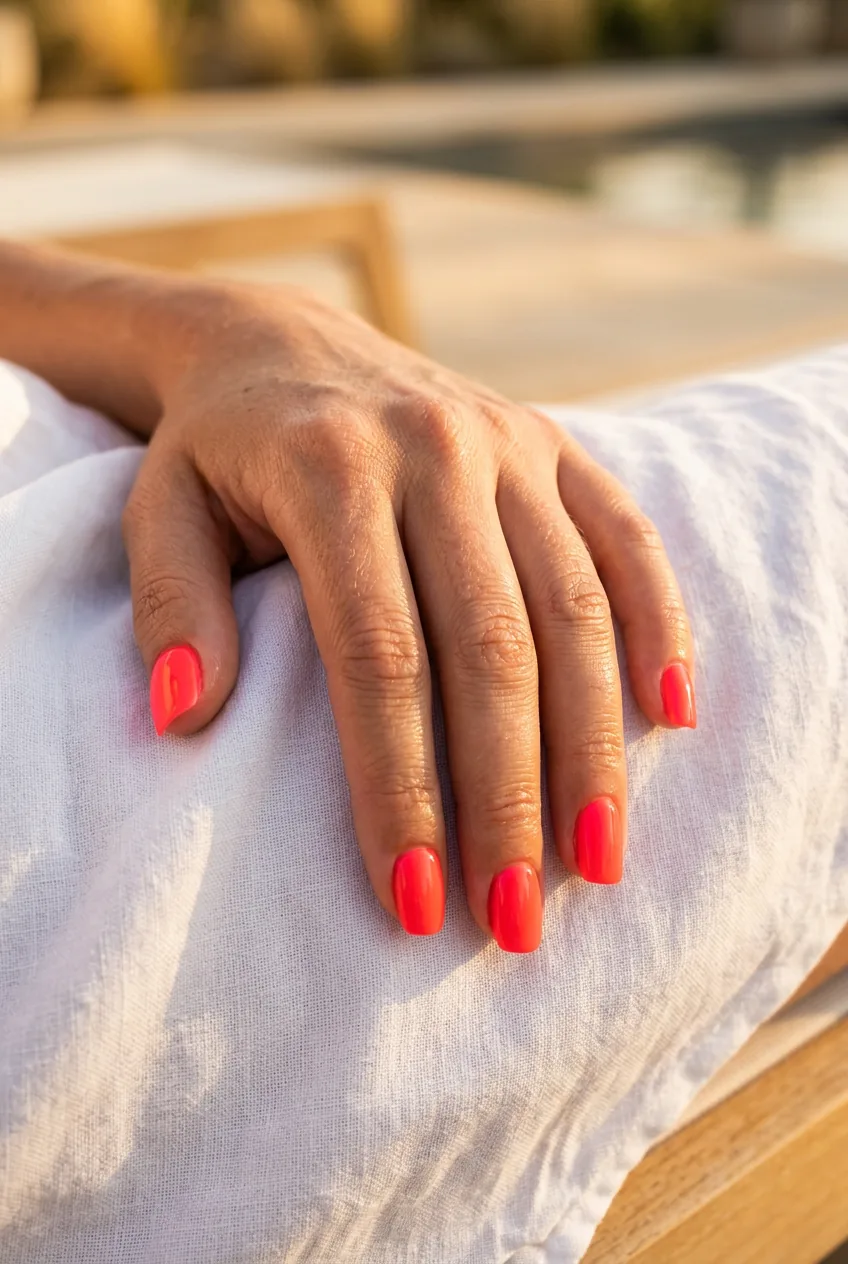
And look at her nails in that photo — see the electric citrus tone against her skin in the warm poolside light? That’s not frivolous. That’s a considered color choice that photographs beautifully, reads confidently from across a room, and holds its own against a tan the way a dusty rose simply cannot. The industry framing of neon as “less than” is just aesthetically wrong, frankly.
What Most People Don’t Want to Say
Here’s the actual unpopular opinion: the neutrals-obsessed nail trend cycle of the last several years has been, aesthetically speaking, a little boring. I’ll wait while you object.
I’ve tried every iteration of “your nails but better” — the sheer pinks, the milky whites, the glazed donut situations. I like some of them. But the sheer dominance of the quiet luxury nail aesthetic has come with a side effect that nobody in the industry wants to acknowledge: it has made women slightly afraid of color. Not just neon — actual pigmented color at all. I’ve watched friends deliberate for twenty minutes in a salon and land on a shade they describe as “safe.” Safe. At the nail salon. Where the stakes are gloriously, wonderfully low.
The irony is that historically, bold nail color has always been the most democratic form of self-expression in fashion. It costs the same as a neutral. It lasts the same amount of time. It requires zero additional skill to apply. And yet somehow the fashion-beauty complex has convinced people it signals something unflattering about them — their taste level, their professionalism, their age. That messaging is worth pushing back on, hard.
I know this is the part where someone says, “But not everyone can wear neon at work.” Fair — workplaces have dress codes, and I’m not going to pretend that’s not a real constraint. But that’s a workplace policy conversation, not an aesthetic one. The argument that neon inherently looks cheap or immature is the one I’m fighting. Those are invented taste hierarchies, and they benefit the people selling you “elevated” neutrals at a premium, not you.
Also worth noting: the same bright, buzzy shades that get labeled “too much” on fingernails get celebrated as “vibrant” and “joyful” on a designer runway look. If neon is sophisticated enough for Valentino, it’s sophisticated enough for your hands. You can read more about how runway nail color trends have been influencing mainstream manicures for years if you want the receipts.
What I Think Should Replace It
So if the industry’s current framework for neon is “seasonal novelty for casual occasions,” what should replace it? My argument is simple: treat neon nails the same way we treat any other serious color family — with craft, with context, and with actual respect for the technical skill involved.
Because here’s what most people don’t realize about neon pigments specifically: they are genuinely harder to work with than standard polishes. They’re notorious for streaking. They often require a white base coat to achieve that full-wattage brightness — skip that step and you get a muddy, underwhelming result that ironically makes neon look cheap. The application technique matters enormously. Getting a flawless, streak-free neon finish in a gel manicure format is actually a skill flex, not a shortcut.

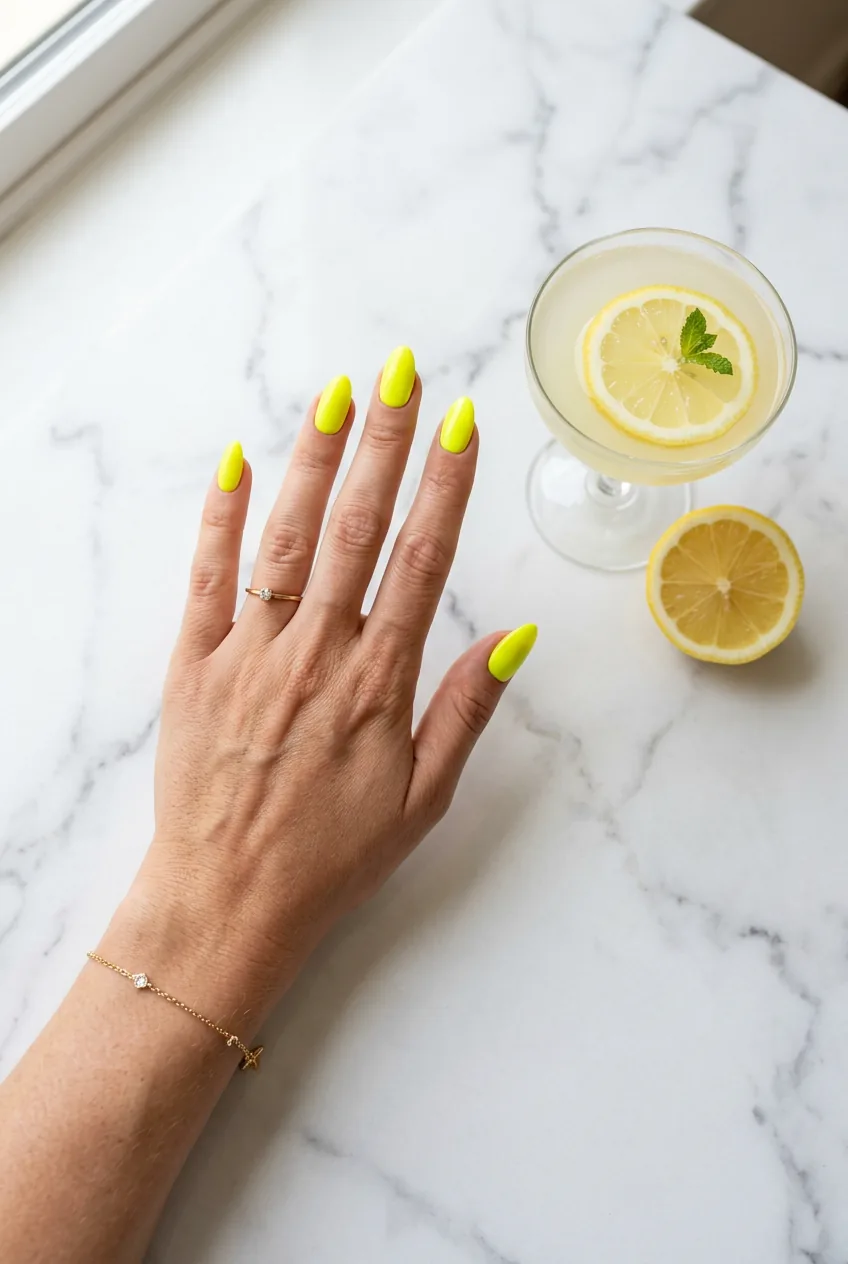
What I’d love to see — and what I think would genuinely shift the conversation — is more nail professionals talking openly about the technical demands of neon work. Salons that have mastered streak-free neon application should be leading with that expertise, not burying their neon swatches in the discount section. Because when neon is done well, it looks extraordinary. Look at those nails in the shot above — the opacity is perfect, the edges are clean, and the color is vibrating with exactly the right kind of energy. That doesn’t happen by accident.
I’d also replace the seasonal gatekeeping entirely. Neon isn’t just for summer nails — a slick neon red in January is a power move. A sharp neon yellow against a winter coat is genuinely cool. The idea that these colors have an expiration date tied to the calendar is a marketing construct, and a limiting one. The most interesting nail people I know wear neon in February and look amazing.
And while we’re at it — let’s also push for more neon representation in the “sophisticated art” end of the nail world. If you’ve ever looked at the truly wild and wonderful end of the design spectrum, the kind of stuff covered in the funky nails conversation, you’ll see that artists who push into genuinely unexpected territory have always used neon as a serious tool. It belongs there.
A Neon Application Tutorial That Changed My Mind
Why This Matters
I know it might seem like I’m overcomplicating a conversation about nail polish. And maybe I am a little. But the way the beauty industry frames color choices — what’s elevated, what’s “appropriate,” what reads as tasteful — shapes how women feel about their own preferences. And when the answer to “should I try neon?” is “maybe just for the beach” often enough, people stop asking.

Neon nails in 2026 are having a genuinely interesting moment. There’s a wave of nail artists using high-voltage pigments in structured, architectural designs — not beach-casual at all, but precise and intentional. There are neon-adjacent finishes — the UV-reactive polishes, the fluorescent duochrome hybrids — that sit in the exact space between playful and technically impressive. This is a color family that is growing up in the best way possible, and it deserves better than the condescending little corner of the polish wall it’s been assigned.
If you’re someone who’s wanted to try a neon manicure but felt vaguely talked out of it by the general vibe of the beauty world — this is me talking you back into it. You can explore everything from the spring nails palette to deep winter neons. The only rule is whether you like it. That’s it. That’s the whole rule.
And for the record: I went back to that salon, asked for the electric coral again, and tipped very well. The nails were excellent. The technician, to her credit, called them “striking” when she was done. Progress.
For a deeper look at how neon shades for different skin tones work across different complexions, it’s worth reading up before your next appointment — the right neon for your undertone makes a noticeable difference.

Questions I Get About This
Do neon nails actually fade faster than other colors?
In regular polish, yes — neon pigments can lose some intensity faster than standard colors, especially with sun exposure. In gel, they hold up much better, though UV rays can still cause minor fading over two to three weeks. A UV-protective top coat helps significantly, and applying with a white base extends vibrancy for the full wear time.
Are neon nails actually harder for technicians to apply?
Yes, genuinely. Neon pigments streak more easily than standard polishes, and most neon shades require a white or light base coat to read at their true intensity. An inexperienced application often looks patchy or dulled — which is part of why neon gets a bad reputation. A skilled tech who knows the formula they’re working with will produce a completely different result.
Can I wear neon nails to the office?
That depends entirely on your workplace culture, not on the color family. Neon isn’t inherently “unprofessional” — that framing is an aesthetic bias, not a universal truth. If your office allows painted nails at all, the brightness of the color is a personal preference call, not a professionalism one. Plenty of people in client-facing, high-stakes careers wear bold nail color every day.
Which nail shapes work best with neon colors?
Honestly, all of them — but neon tends to look particularly intentional on clean, defined shapes like square, squoval, or coffin because the shape’s precision complements the boldness of the color. On very short nails, a single high-voltage neon can read as a chic pop of color rather than overwhelming. The worst pairing isn’t a shape — it’s an uneven edge, because neon shows imperfect filing more clearly than a neutral would.
If you’ve made it this far and you’re already mentally booking an appointment for something in electric green or screaming orange — good. You should. And if someone at the salon gives you that look, the casual look? Just smile. Your nails will do the talking.