








I remember the exact moment I decided I wanted stiletto nails. I was standing in a nail salon waiting room, flipping through a dog-eared magazine, and I saw a photo of a woman’s hand resting on a black leather steering wheel — long, fierce, pointed tips lacquered in deep plum. My first thought was gorgeous. My second thought, almost immediately, was I could never. And the wild thing is, I couldn’t even tell you where that second thought came from. Nobody had said a word to me. I just… believed a bunch of things that turned out to be mostly wrong.
The Myth That Stiletto Nails Are Always Impractical
Here’s the myth, steel-manned as fairly as I can: stiletto nails are extremely long, tapered to a sharp point, and that shape creates a small contact surface area that’s genuinely more vulnerable to snagging than, say, a square or squoval nail. The longer the nail, the more lever force gets applied when you catch it on something. Geometry doesn’t lie. This concern isn’t imaginary.
But here’s what the myth gets wrong: it assumes that more vulnerable to snagging means impossible to wear in daily life. Those are very different things. Driving with stilettos? Fine — your fingertips don’t actually grip the steering wheel, your palms and lower fingers do. Typing? You adapt. Within about a week, most people naturally shift to typing on the pads of their fingers rather than the tips. I’ve met a surgeon (not practicing with them, obviously) and a pastry chef who both wear medium-length stilettos in their personal lives without drama.
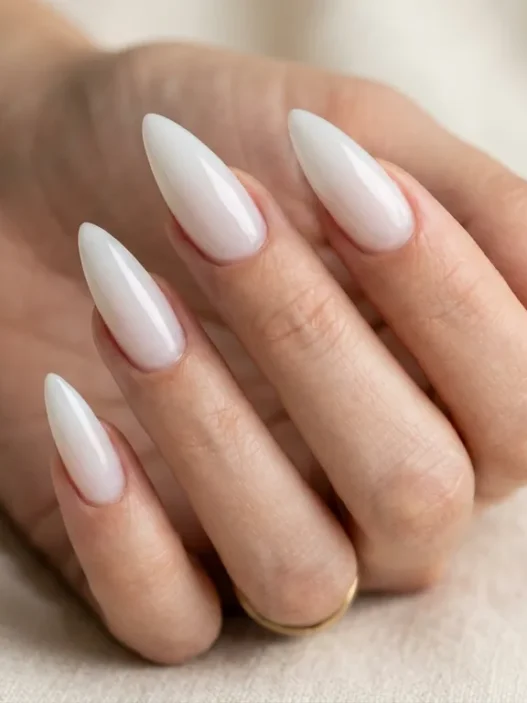
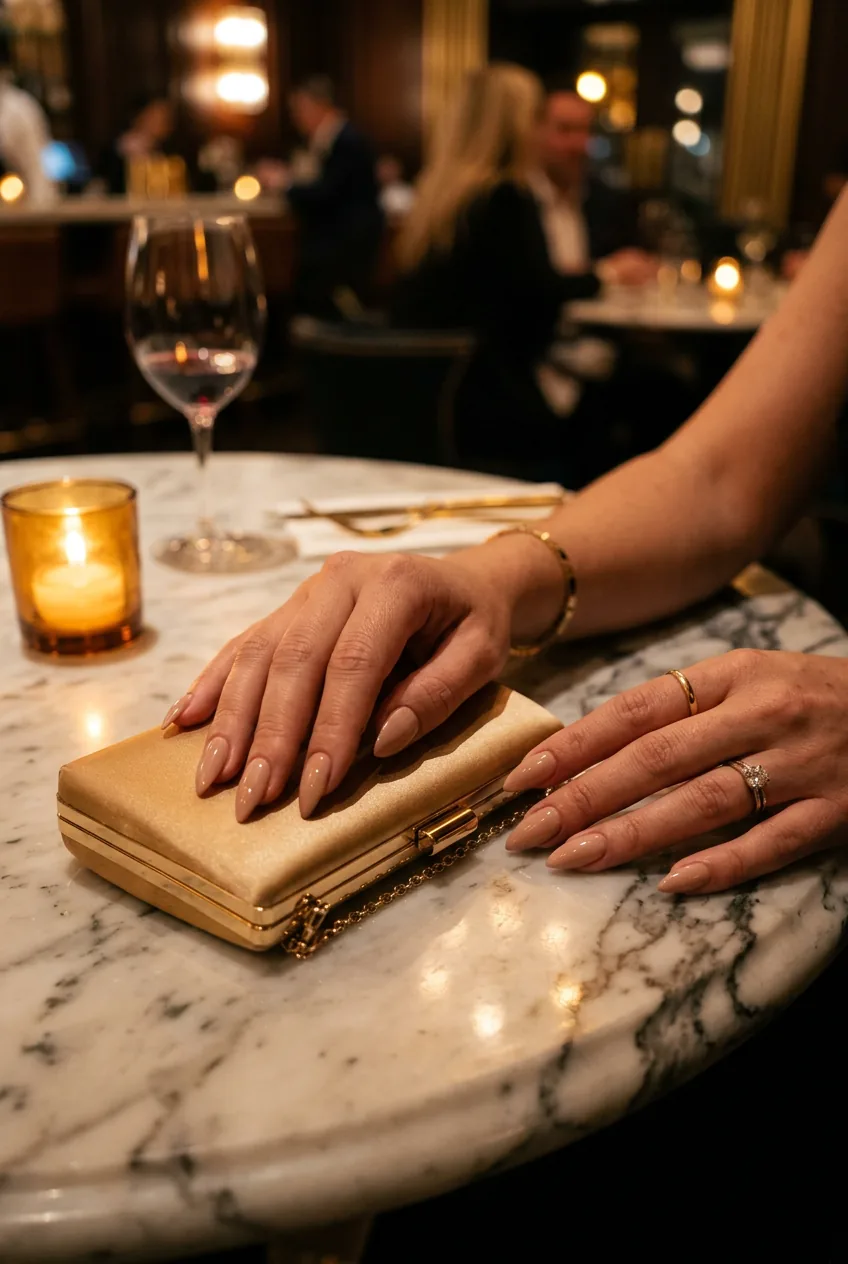
The impracticality myth also conveniently ignores that stilettos exist on a spectrum. There’s a big difference between a 3cm pointed tip and a 7cm runway nail. Medium stilettos — the kind that extend maybe an inch past the fingertip — are genuinely wearable for most people most of the time. When someone says “I could never,” they’re often picturing the extreme end of the shape, not the everyday version. Look at the nails in this photo — she’s holding a satin clutch, navigating a whole evening out, and those points are sharp but not theatrical. That’s the length most people actually wear.
The Breakage Myth We Inherited From the Early 2000s
This one has a very specific origin story and I find it genuinely fascinating. In the late 1990s and early 2000s, acrylic technology was less refined. Nail techs were working with formulas that set harder and more brittle than what we have now, and the filing techniques used to achieve a pointed shape often thinned the stress point — that little zone just before the tip tapers — down further than was structurally sound. So yes, those nails broke. A lot. And the women who wore them in 2003 told their daughters, who told their friends, and here we are.
Modern acrylic and especially modern gel formulations are a completely different product. They have more flex built in, which is exactly what a pointed shape needs — a little give rather than a snap. A well-applied stiletto nail in 2026, done by a tech who actually knows how to build apex structure properly, is structurally sound. The apex — that highest point of the arch — is everything. When it’s placed correctly (closer to the center of the nail rather than too far back or too far forward), it distributes pressure along the length of the enhancement rather than concentrating it at the tip.
I asked my nail tech about this once, and she pulled out an analogy I’ve never forgotten: a well-built stiletto nail is like a suspension bridge. The arch carries the load. A flat nail with a point is like a diving board — all the stress at the end. The breakage people experienced and still fear isn’t an inherent property of the nail shape — it’s a property of poor construction. Find a tech who understands structural build and half your breakage fears evaporate.
A solid gel manicure applied over a good structure is remarkably resilient — I’ve worn a medium stiletto set through moving house, two camping weekends, and approximately one thousand hours of keyboard work without a single break. The key word is good structure, not stiletto shape.
A Build Tutorial That Changed How I Think About Structure
The ‘Only One Type of Woman Wears These’ Myth
Okay, this is the one I feel most strongly about, and I’ll be a little controversial: I think the idea that stiletto nails belong to a specific aesthetic, demographic, or personality type is one of the more quietly snobbish things that exists in nail culture. And it cuts in multiple directions simultaneously. Some people think stilettos are too “hood.” Some think they’re too “Instagram-influencer.” Some think they’re too “not serious enough for a grown woman.” All of these are the same judgment wearing different outfits.
The shape has been worn across cultures and contexts for decades. Long pointed nails have roots in Chinese imperial court aesthetics, in West African fashion traditions, in Latinx nail culture in the US, and yes, also in early-2000s pop star imagery. No single demographic owns them. What’s interesting is that when a shape gets associated with communities of color or working-class aesthetics, it gets labeled “unprofessional” or “over the top” — and then fifteen minutes later it appears on a runway and suddenly it’s “high fashion.” I’ve watched this cycle happen with stilettos in real time.
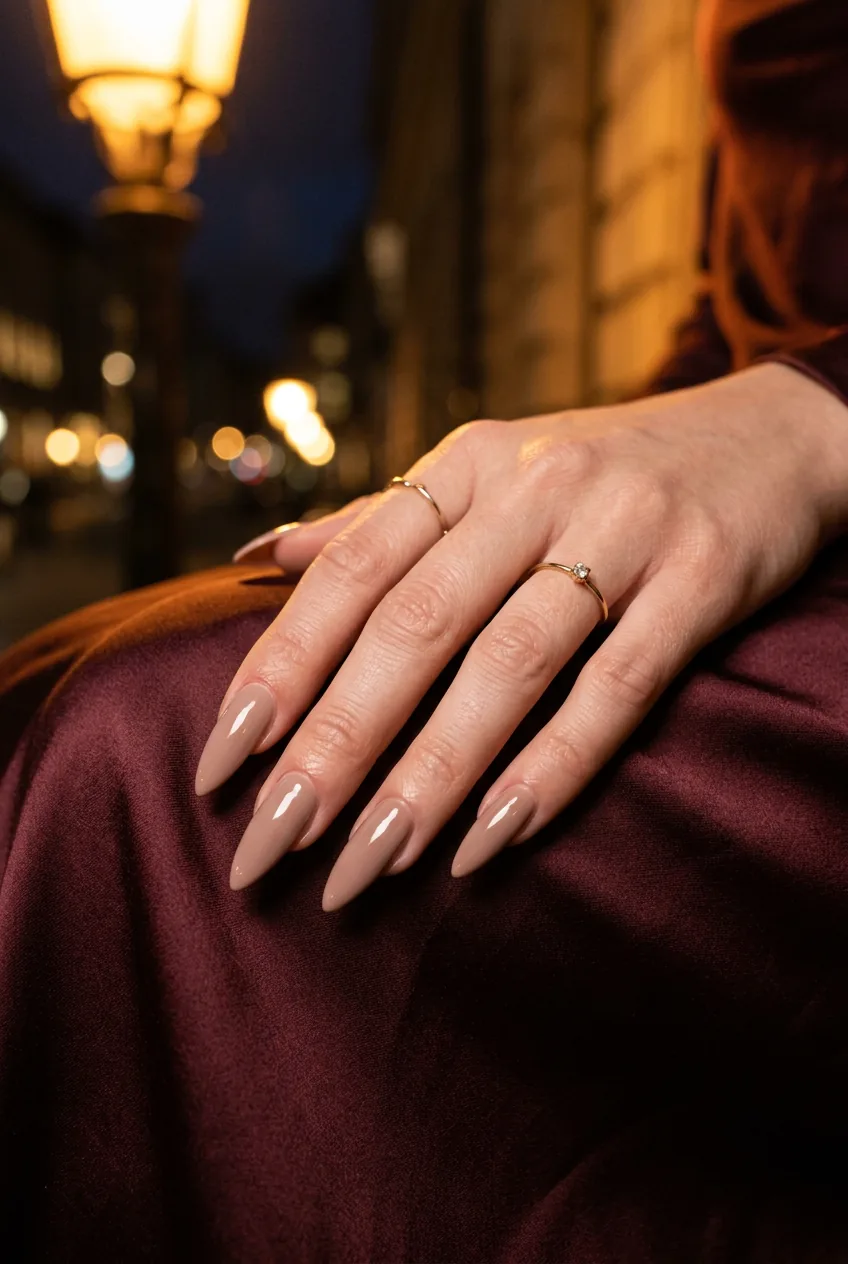
See the woman in this shot — she’s dressed for an evening that involves a satin bag and what looks like a silk dress. The nails are pointed, polished, and completely at home in that setting. There’s no single “type” of woman here. The shape works because she’s wearing it with intention, not because it belongs to a particular identity box.
For the record, my own hands are short and wide-palmed. I was told for years that stilettos would “look wrong” on me. They don’t. They elongate. If you’ve ever felt like this shape wasn’t “for you” based on some aesthetic rule someone else wrote, I’d encourage you to try a medium length before you decide. You might surprise yourself. And if you genuinely prefer the look of short natural nails, that’s wonderful too — but make that choice because you love that shape, not because someone made you feel stilettos were above or below you.
The Myth That Stilettos Always Destroy Your Natural Nail
Myth: Wearing stiletto enhancements ruins your natural nails permanently.
The honest version of this concern: Improper removal of acrylic or hard gel enhancements absolutely can damage natural nails. Peeling, picking, or filing off enhancements aggressively removes layers of the actual nail plate. This isn’t a stiletto-specific problem — it happens with coffin nails, almond nails, and even a standard short natural nail that’s had gel applied and ripped off carelessly. The damage comes from the removal method, not the shape.
What’s actually true: Natural nails under a well-maintained enhancement can actually improve. I know this sounds counterintuitive, but think about it — the nail is protected from the daily knocks, water exposure, and mechanical stress it usually absorbs. Some people find their natural nails are longer and stronger when they take a break from enhancements than they were before they started, because the nail had time to grow out without being filed down by life.

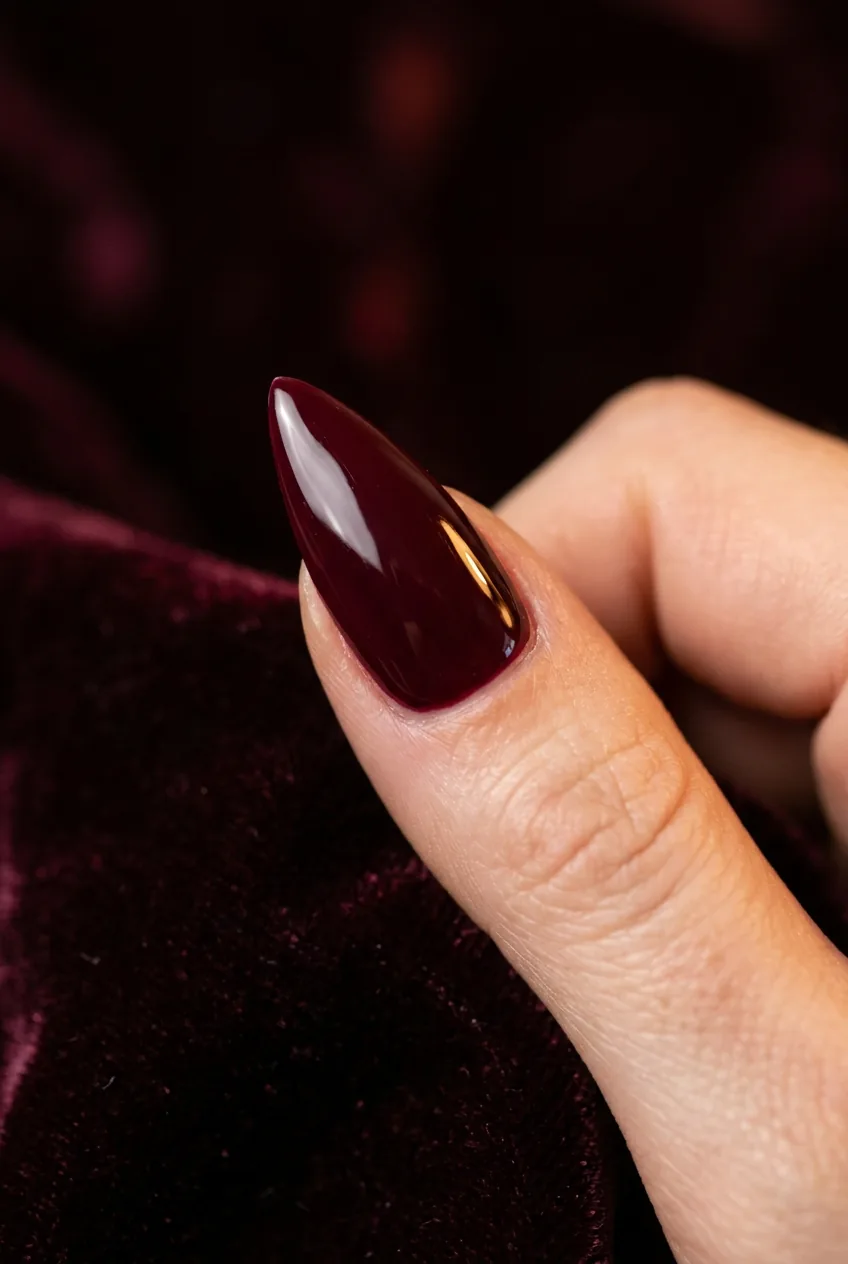
The protocol that makes a real difference: soak-off removal (not drill-off, not peel-off), regular fills every 2–3 weeks so the product doesn’t lift and create moisture traps, and a cuticle oil habit that you actually stick to. The nails in this image — look at how clean the cuticle line is, how the skin around the nail looks healthy and hydrated. That doesn’t happen by accident. It happens because the person wearing them is taking care of the nail bed underneath, not just the surface on top.
Thinking about how enhancements affect nail health is worth doing before your first appointment — an informed client asks better questions and ends up with a better result. Ask your tech specifically about their removal process. If they seem annoyed by the question, that’s information.
The Workplace Myth Nobody Thinks to Question
The conventional wisdom: stiletto nails are inherently unprofessional and will hold you back in any serious career. I’ve heard this stated as absolute fact by people who clearly never questioned where it came from. Let me gently pull this apart.
First, there are some workplaces where pointed nails genuinely create safety or hygiene issues — healthcare settings, certain food-handling roles, jobs involving heavy machinery. That’s real and those rules exist for good reasons. I’m not arguing with those. But outside of those specific contexts, the idea that pointed nails signal incompetence or unprofessionalism is a cultural assumption, not a professional standard. It’s the same logic that used to say natural hair was “unprofessional” in office settings. It describes a bias, not a fact.
What actually matters in most workplaces is whether your nails are clean, maintained, and appropriately scaled. A chipped, ragged, grown-out set of any shape looks less professional than a polished, well-maintained stiletto. Length matters less than condition. I’ve sat in boardrooms across from women with pointed tips in neutral shades and they were the most put-together people in the room. The concern about stilettos in professional settings is almost always specifically about length (very long nails in some contexts do read as distracting) rather than the pointed shape itself.

If your workplace has a genuine nail policy, read what it actually says rather than inferring it. Most dress codes that exist on paper say nothing specific about nail shape at all — they address length and sometimes color. You may find you have far more latitude than the ambient culture of your office has led you to believe. And understanding which nail shapes read as professional in 2026 context is a much more nuanced conversation than “stilettos bad, square nails good.”
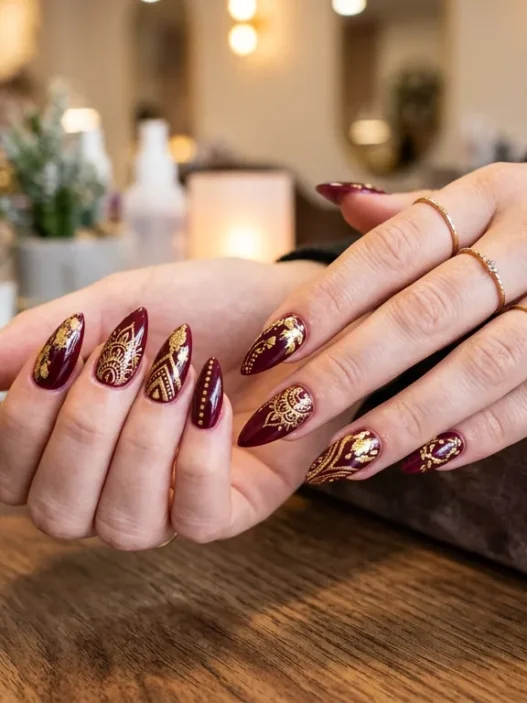
The visual difference between a pointed nail that reads as elegant versus one that reads as “too much” is almost entirely about length and color choice, not the actual shape. A medium-length stiletto in a soft taupe or a deep burgundy is, frankly, sophisticated. It’s the 4-inch neon green version that might raise eyebrows — and honestly, that’s a length-and-color conversation, not a shape conversation. Check out the range of what’s possible across different nail shapes and lengths and you’ll see quickly that stiletto occupies a much wider aesthetic spectrum than the myth allows for.

Questions I Get Asked About This Shape
Do stiletto nails always have to be super long to look right?
Not at all — medium-length stilettos are arguably the most wearable version of the shape. The point reads clearly even at a modest length. I’d actually start shorter if you’re new to the shape, get used to the geometry, and then decide whether you want to go longer from there.
Can I get stiletto nails on naturally short nails?
Yes, with nail extensions — either acrylic, hard gel, or builder gel. Your natural nail doesn’t need to be any particular length because the extension provides the structure. Just make sure you’re going to a tech who understands how to build apex strength into an extension, because that structural step matters more for a pointed shape than for rounder ones.
What nail art actually works well on a stiletto shape?
The pointed canvas is genuinely great for elongated designs — think vertical ombre, single jewel placements at the base, or thin line work that follows the nail’s natural direction. What gets awkward is very busy, symmetrical patterns because the shape isn’t symmetrical — it tapers. Minimalist and directional designs tend to look more intentional than dense, all-over art. A deep monochrome or a soft gradient ombre on a stiletto shape is genuinely one of the most striking combinations in nail art right now.
How often do stiletto nails actually need fills?
Every two to three weeks is the standard answer, and it’s a good one. The taper of a stiletto shape means that as the natural nail grows, the stress point shifts — fills aren’t just cosmetic, they maintain the structural integrity of the shape. Going longer than three weeks between appointments significantly increases your breakage risk, not because of the shape specifically, but because any extension gets structurally compromised the longer it grows out without being rebalanced.
Here’s where I land after years of thinking about this: most of the hesitation people feel around stiletto nails is borrowed anxiety, not personal experience. It was handed down, absorbed from ambient cultural noise, built on outdated product technology or on aesthetic biases that deserve to be examined rather than inherited. Try them with good information and a skilled tech. You might love them. You might decide they’re not your thing after all — and that’s completely fine too. But make that call yourself, not on behalf of a myth that was already wrong when someone first told it to you.