





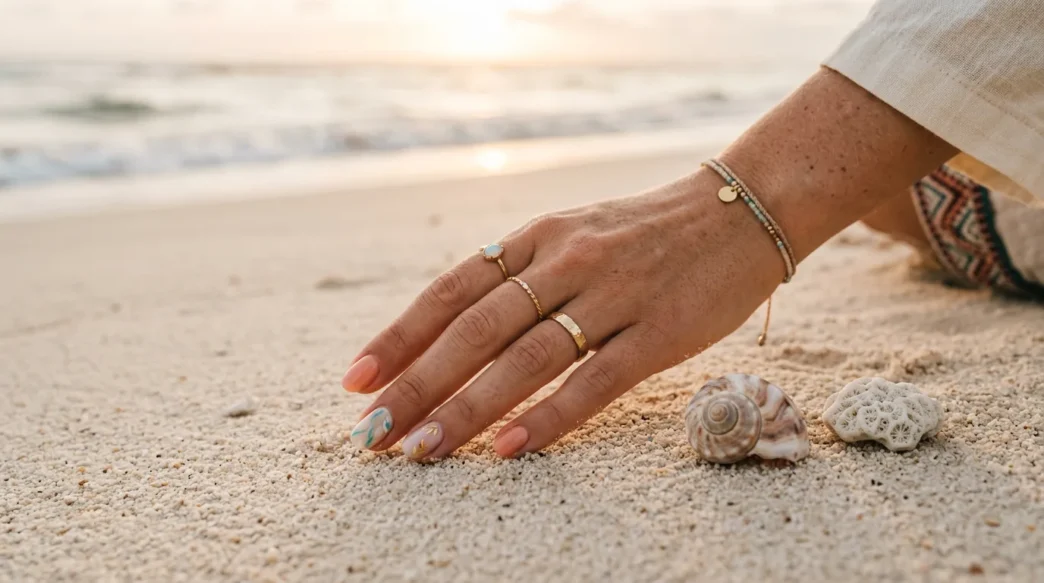
I spent last weekend scrolling through nail Instagram, and honestly? The beach nails 2026 trends are everywhere, but nobody’s explaining what they actually ARE. Like, what makes “sea glass gradient” different from regular ombré? And why is everyone suddenly obsessed with “salt-kissed chrome”?
So I did the digging. I talked to nail techs, watched way too many TikToks, and figured out the actual techniques behind these viral looks. Because knowing what to ask for (and what alternatives exist) makes all the difference when you’re sitting in that salon chair.
Your Complete Beach Nails 2026 Decoder
- Sea Glass Gradient — The Technique Behind the Hype
- Salt-Kissed Chrome — What Makes It Different
- Driftwood Neutrals — Where This Trend Actually Came From
- Coral Crush Ombré — The Blending Method That Works
- Sandy Nude Textures — How to Get That Gritty Finish
- Ocean Wave Marble — The Movement Everyone’s Copying
- Seashell Shimmer — Why This Isn’t Just Regular Glitter
- Tide Pool Blues — The Color Theory Behind the Mix
- Beach Glass Jelly — What Makes It So Translucent
1. Sea Glass Gradient — The Technique Behind the Hype
This isn’t your typical ombré. Sea glass gradient uses a stippling technique with makeup sponges to create that frosted, weathered look that actual sea glass has. The magic is in the layering — three different opacities of the same color family, built up in thin coats.
The key difference from regular gradient nails? The opacity varies deliberately to mimic how sea glass catches light. Some areas are almost clear, others are deeply saturated. It’s irregular and organic, not smooth and perfect.
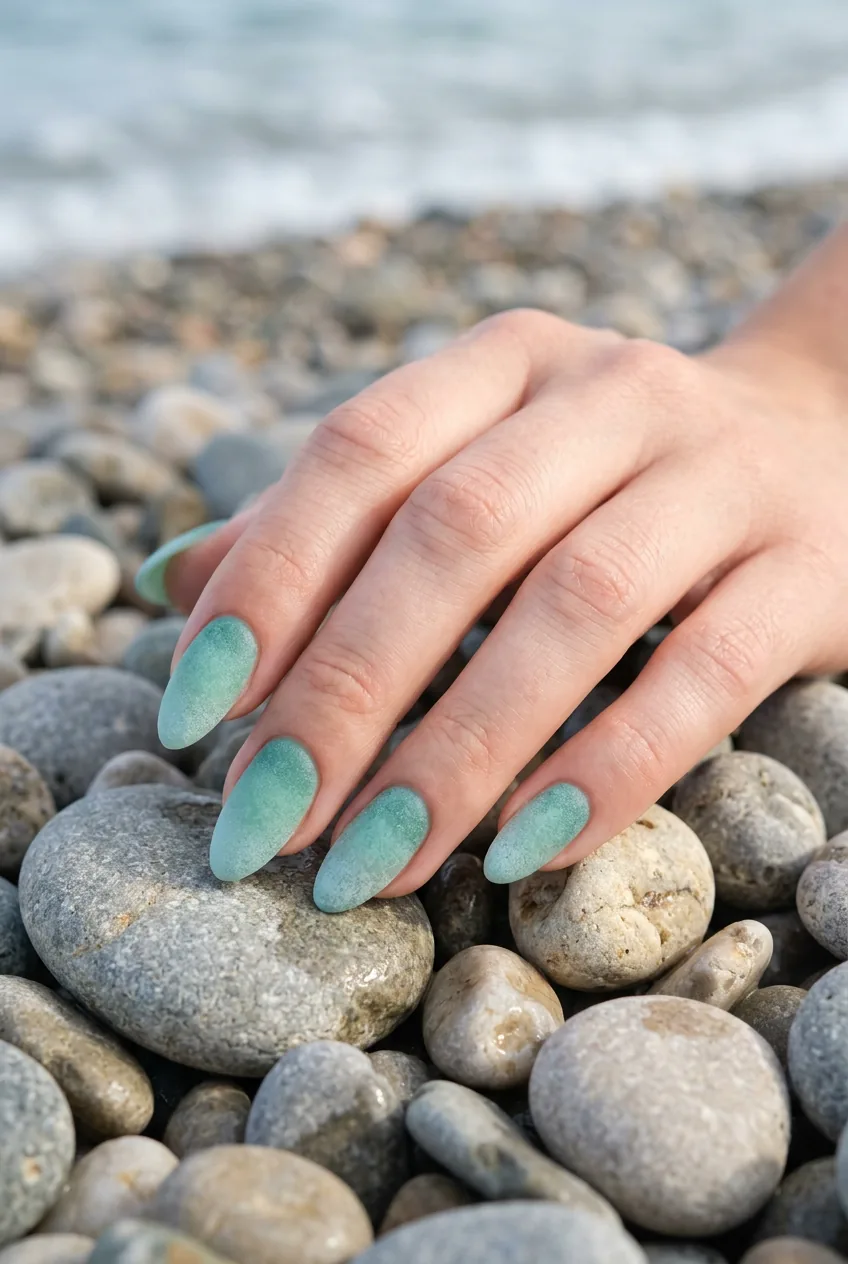
Who it suits: Anyone who wants something beachy but sophisticated. Works especially well on shorter nails where the gradient won’t get lost.
How to ask for it: “I want a sea glass gradient in [your color choice]. Can you do the stippled technique with different opacities?” If they look confused, show them a photo of actual sea glass and explain the frosted, uneven opacity you’re going for.
2. Salt-Kissed Chrome — What Makes It Different
Salt-kissed chrome is chrome powder applied over a slightly textured base — not smooth glass-like chrome. The texture comes from a matte top coat that’s partially buffed away, creating microscopic peaks and valleys that catch light differently.
Think of it as chrome meets sea salt spray. The finish has this organic, lived-in quality instead of that mirror-perfect chrome we’ve seen everywhere. It’s more wearable for everyday because it doesn’t show every fingerprint.
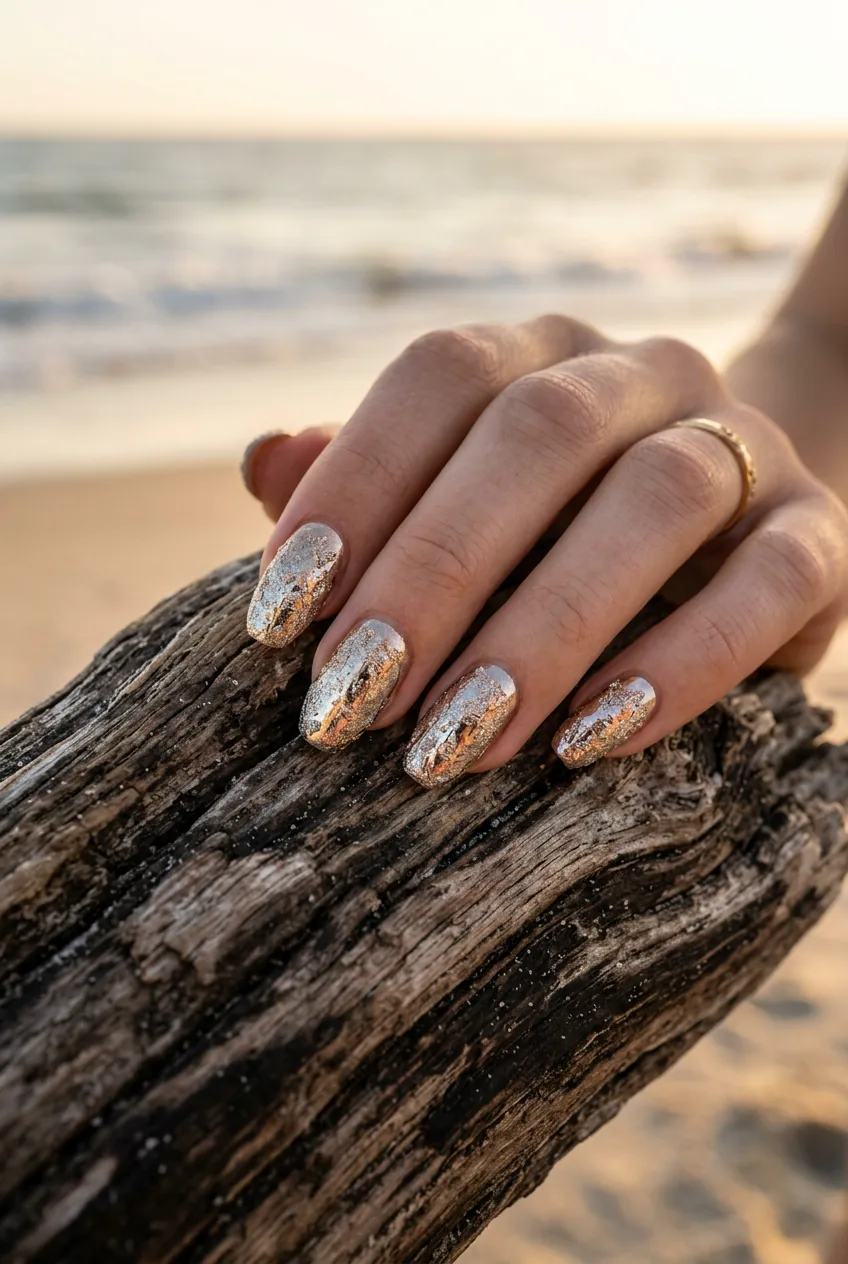
Who it suits: Perfect for anyone who loves chrome but finds it too high-maintenance. The textured finish is more forgiving and works with both cool and warm skin tones.
Alternative if it’s not for you: Try a satin chrome finish instead — it gives you the metallic look with less intensity and easier maintenance.
3. Driftwood Neutrals — Where This Trend Actually Came From
This trend started with nail artists trying to recreate the exact color of weathered driftwood — those gorgeous grays and taupes with hints of lavender and pink undertones. It’s not just “gray nails.” The color shifts depending on lighting, just like real driftwood.
The technique involves layering sheer washes of color instead of one solid coat. Usually gray base, then sheer lavender, then a hint of pink or peach. The layering creates that complex, shifting color that makes driftwood so beautiful.
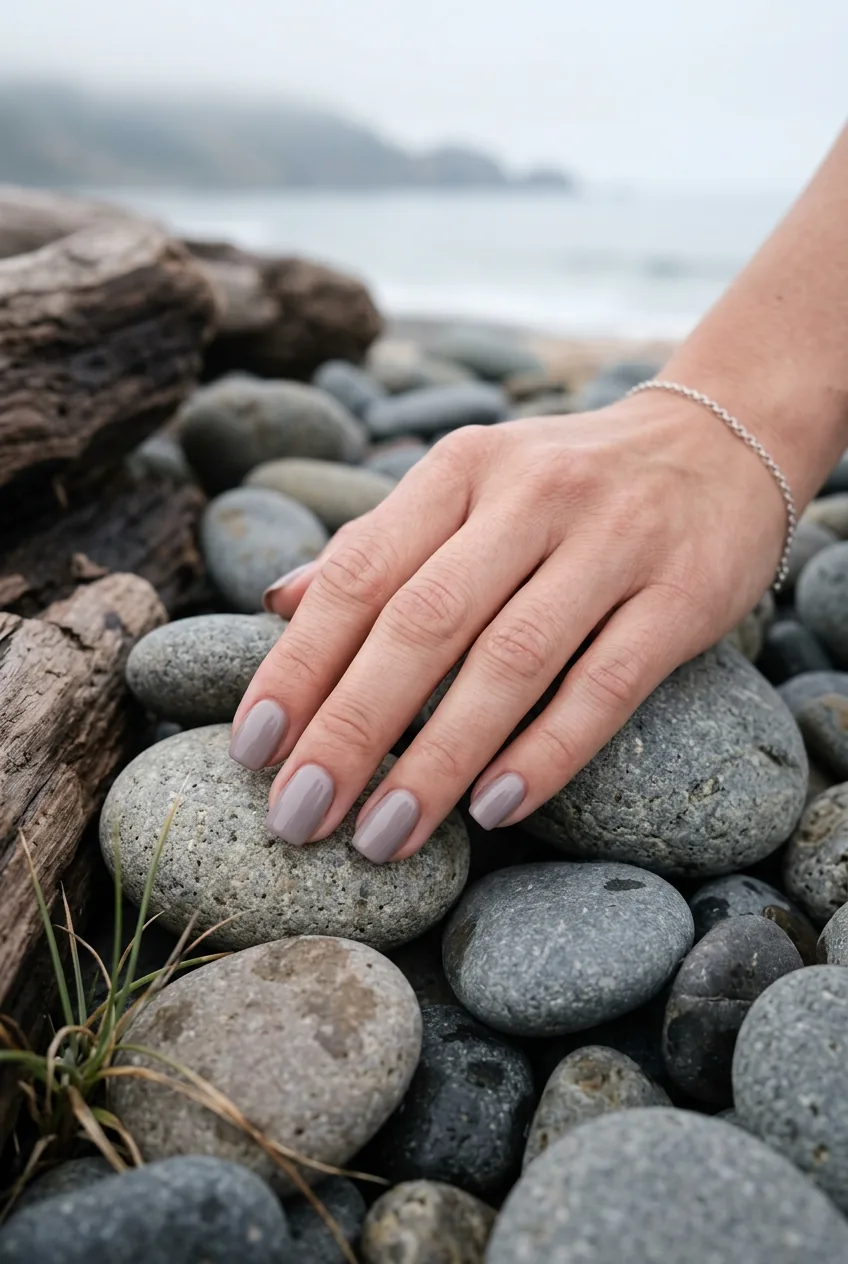
I actually tried to recreate this at home and learned the hard way that the undertones matter SO much. Cool grays look ashy, warm grays look muddy. You need that perfect balance.
Who it suits: Anyone wanting sophisticated neutrals that aren’t boring. Especially flattering on people with cool or neutral undertones.
4. Coral Crush Ombré — The Blending Method That Works
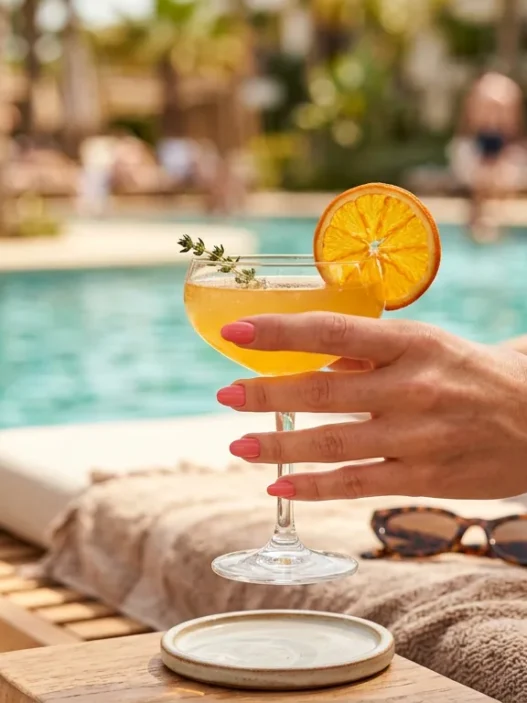
Coral crush ombré uses a wet-blending technique where colors are mixed while still tacky, not layered and sponged like traditional ombré. This creates smoother color transitions that look more natural.
My personal pick from this whole list? This one. I got coral crush ombré done three weeks ago and I’m still obsessed. The color shift from peachy coral to deep orange-red feels so much more sophisticated than regular coral. Plus, it photographs beautifully — every Instagram story looks like a professional shoot.
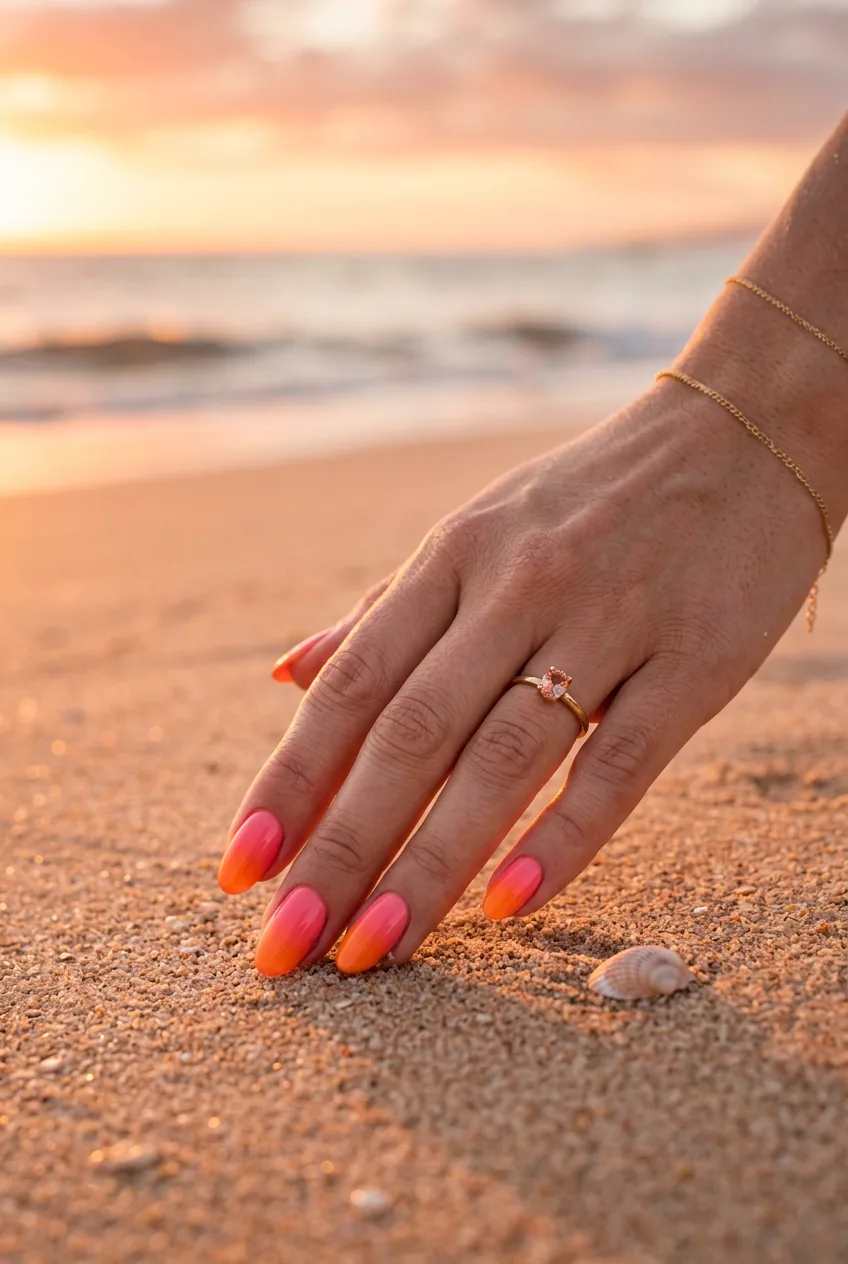
The “crush” part refers to how the colors seem to melt into each other, like crushed coral mixed with sand. It’s achieved by applying colors in small sections and immediately blending while wet.
Who it suits: Works on all skin tones but looks especially stunning on medium to deep complexions where the coral really pops.
How to ask for it: “I want a wet-blended coral ombré, not sponged. Can you do the crush technique?” Be specific about the wet-blending method — it makes all the difference in the final look.
Watch the Wet-Blending Magic
5. Sandy Nude Textures — How to Get That Gritty Finish
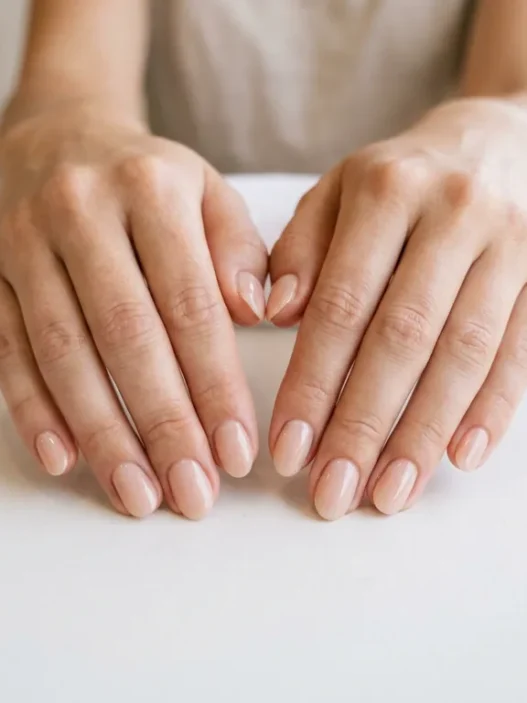
This trend mimics actual sand texture using fine-grit powder mixed into clear top coat. Not sugar sand — think more like the slightly coarse sand you find on most beaches. The texture is subtle but definitely noticeable when you run your finger over it.
The nude base is usually a custom mix to match your specific skin tone, then the sandy texture is added on top. Some techs use actual cosmetic-grade sand, others use textural powders designed for nail art.
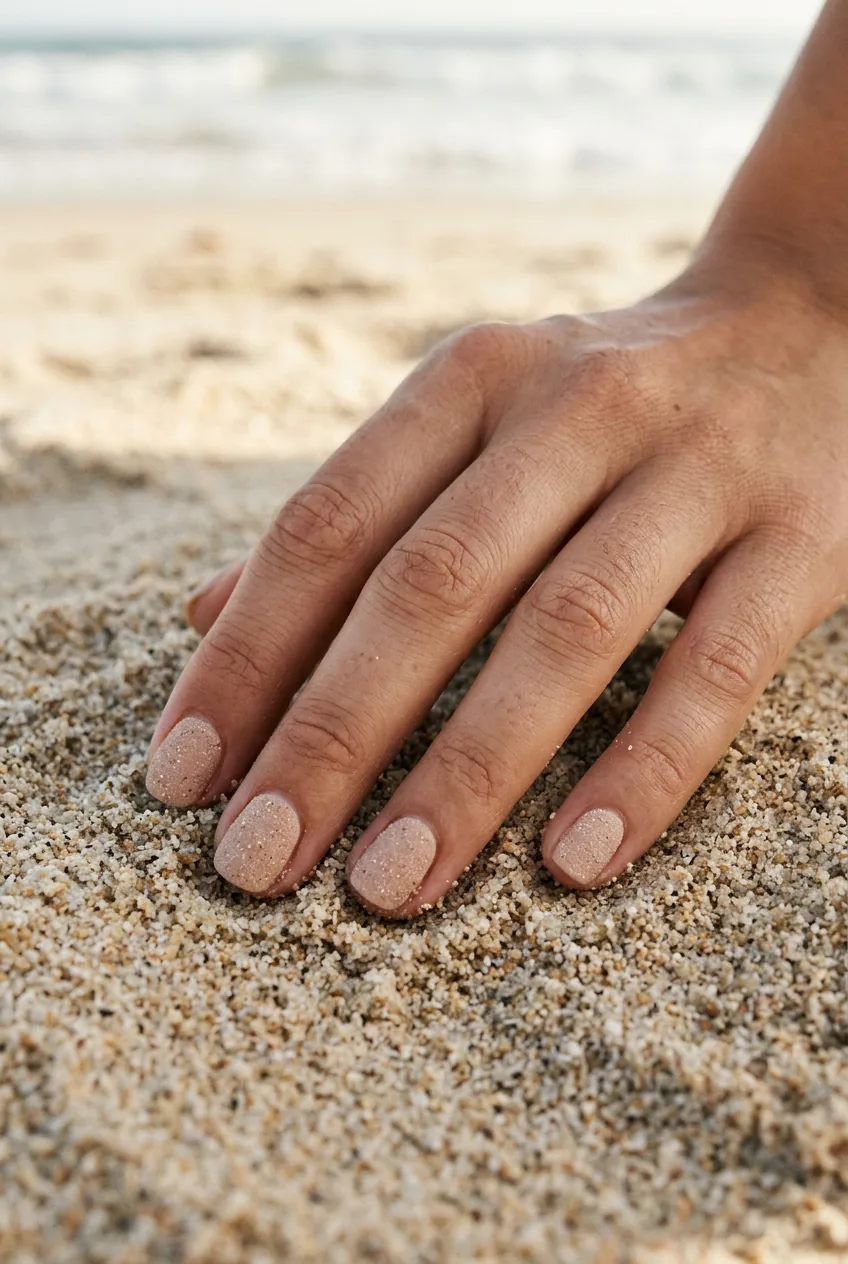
Who it suits: Best for people who like tactile textures and don’t mind slightly rougher nails. Not great if you catch your nails on fabric a lot — the texture can snag.
Alternative if it’s not for you: Ask for a matte nude with subtle shimmer instead. You’ll get the beachy vibe without the texture.
6. Ocean Wave Marble — The Movement Everyone’s Copying
Ocean wave marble uses a water-marbling technique, but instead of dropping colors randomly, the design is deliberately guided to create wave-like movement. The colors flow from light foam whites to deeper ocean blues and greens.
What makes this different from regular marble nails is the directional movement. Each nail shows a different part of the same wave, so when you look at your full hand, it tells a story of water movement.
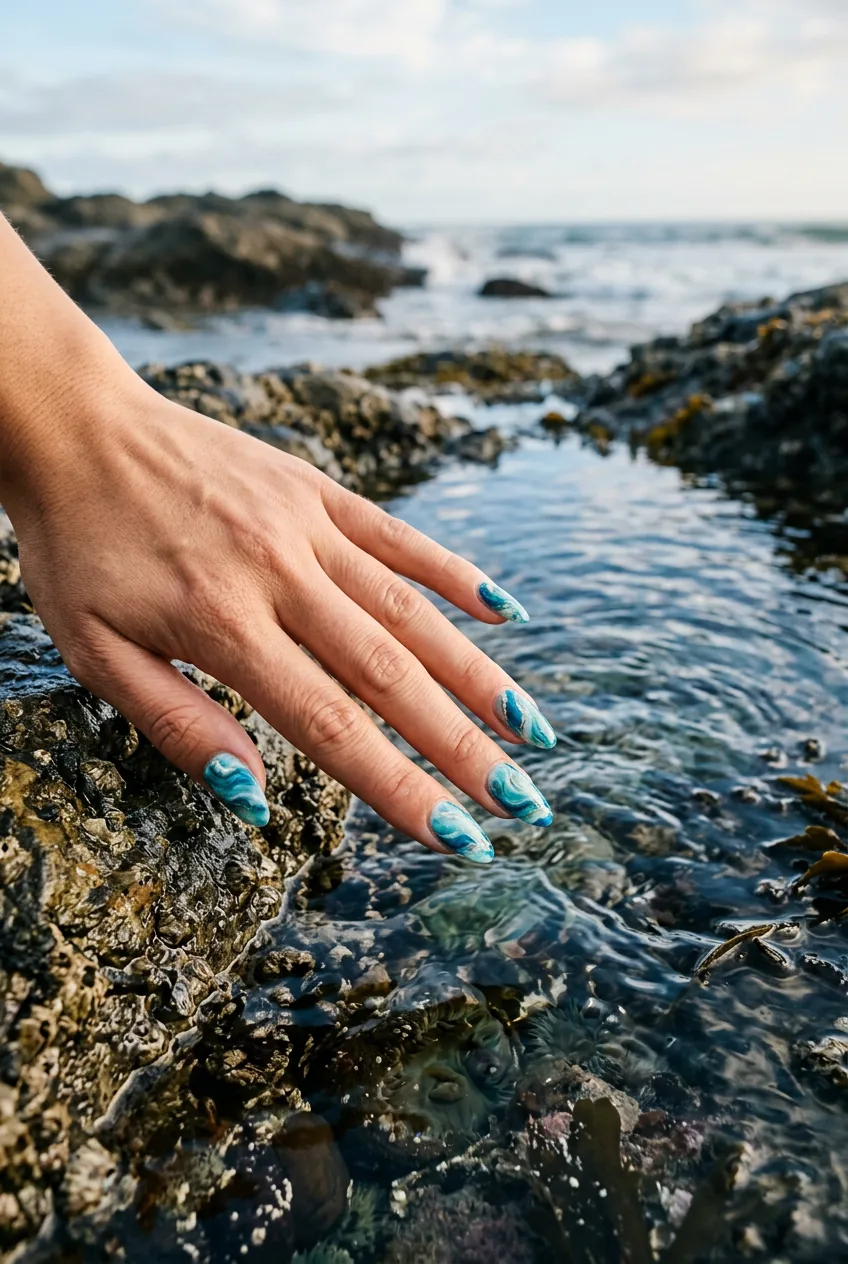
The technique requires serious skill because the artist has to control the marble pattern while it’s floating on water. Not every tech can do this well — ask to see photos of their previous wave marble work.
Who it suits: Statement lovers who want something truly unique. Works best on longer nails where you can see the full wave pattern.
7. Seashell Shimmer — Why This Isn’t Just Regular Glitter
Seashell shimmer uses iridescent flakes instead of glitter particles. The flakes are larger and more irregular, mimicking the way light catches the inside of an abalone shell. The finish shifts between pink, blue, green, and gold depending on the angle.
The application technique matters too. Instead of mixing the flakes into polish, they’re applied individually while the base coat is tacky, then sealed with clear top coat. This creates depth — some flakes sit deeper in the nail bed, others float near the surface.
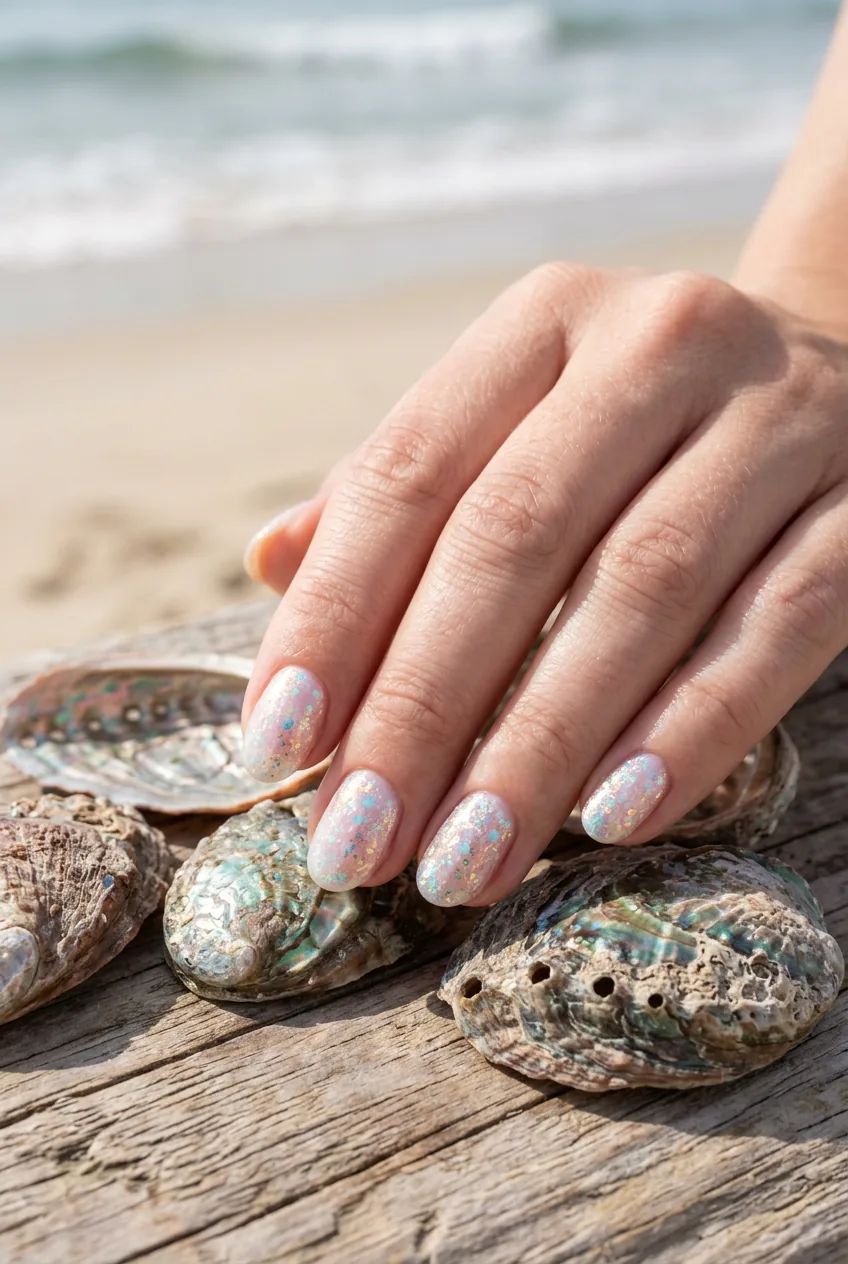
I love how this looks in natural light especially. Indoor lighting makes it pretty, but sunshine? That’s when the magic really happens and you see all those color shifts.
Who it suits: Anyone who wants something eye-catching but not over-the-top. The iridescent quality is sophisticated enough for work but fun enough for vacation.
8. Tide Pool Blues — The Color Theory Behind the Mix
Tide pool blues aren’t just random blue shades mixed together. The color palette is specifically chosen to mimic what you actually see in tide pools — deep navy water, lighter sky blue reflections, hints of green from algae, and touches of purple from sea urchins.
The technique uses a layering method where each color is applied in organic shapes, not geometric patterns. The edges blur into each other like watercolor, creating that natural tide pool look where colors blend and separate unpredictably.
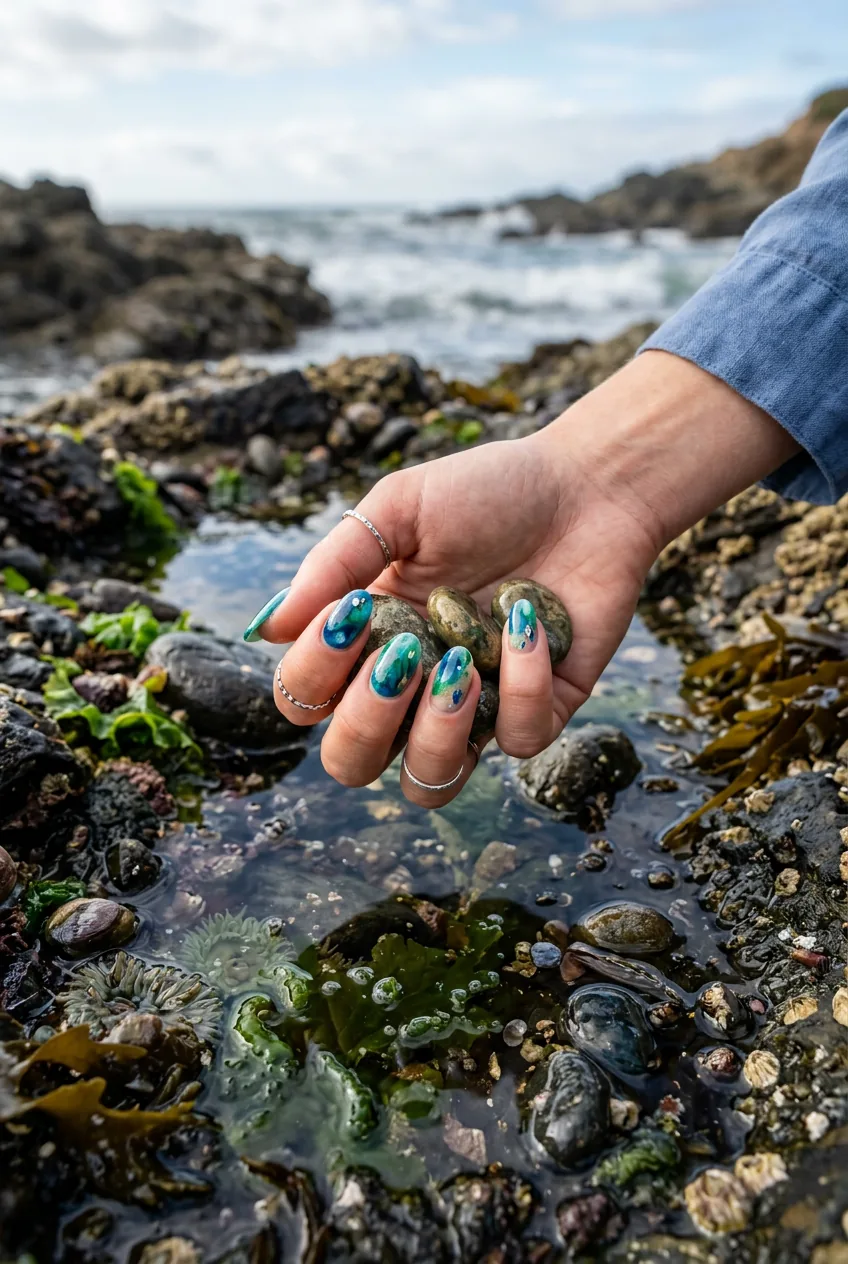
What I find fascinating is how nail artists study actual tide pool photos to get the color relationships right. It’s not just “throw some blues together” — there’s real thought behind which blues, where they go, and how they interact.
Who it suits: Blue lovers who want something more complex than solid color. Particularly stunning on people with warm undertones where the contrast really pops.
For those interested in more summer nail designs, this technique adapts beautifully to other seasonal palettes too.
9. Beach Glass Jelly — What Makes It So Translucent
Beach glass jelly nails use a specific type of gel polish that’s formulated to be translucent rather than opaque. The “jelly” effect comes from building up thin layers — usually 3-4 coats — to create depth while maintaining that see-through quality.
The colors are typically soft and muted — think seafoam green, soft coral, or pale lavender. The translucent quality means the color seems to glow from within your nail bed instead of sitting on top of it.
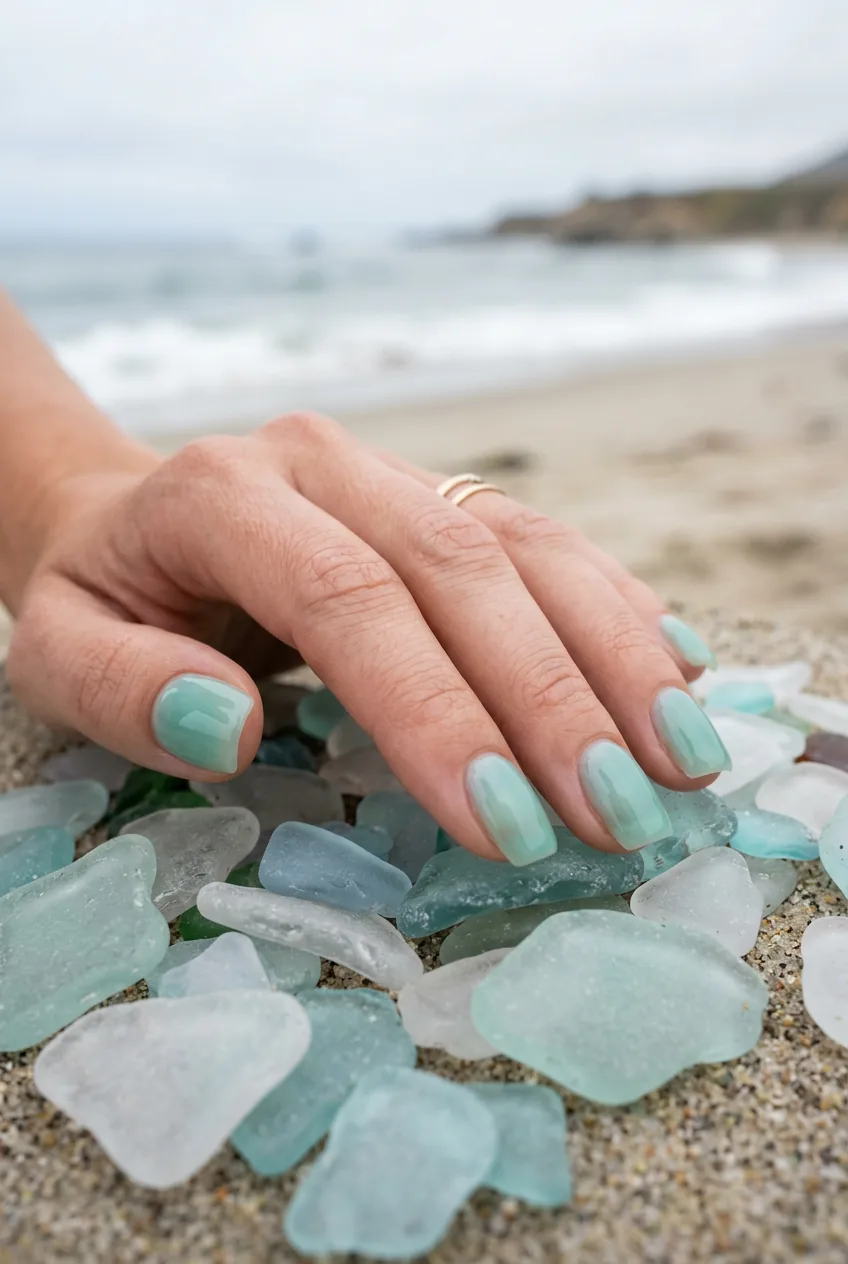
The key to getting this right is the base prep. Your nail technician needs to buff and shape perfectly because any imperfections will show through the translucent polish. It’s more work upfront but the result is so worth it.
Who it suits: Perfect for minimalists who want something special but not bold. The translucent quality is universally flattering and works with any skin tone.
Alternative if it’s not for you: Try a sheer wash of color instead — you’ll get a similar subtle effect with less maintenance.
Questions I Get About Beach Nails 2026
How long do these textured finishes actually last?
The sandy textures and chrome finishes typically last 2-3 weeks with proper top coat application. The textured ones might show wear at the tips sooner than smooth finishes, but that actually adds to the beachy, lived-in look.
Can I do gradient techniques with regular polish at home?
Yes, but gel polish gives you more working time. With regular polish, work quickly and use the stippling sponge method rather than trying to blend wet polish. The results won’t be quite as smooth, but you can definitely achieve a similar effect.
Which trends work best on short nails?
Sea glass gradient, driftwood neutrals, and beach glass jelly all look amazing on short nails. The ocean wave marble needs length to show the full pattern, so skip that one if you keep your nails short.
Are these trends office-appropriate?
Driftwood neutrals, beach glass jelly, and subtle seashell shimmer are all workplace-friendly. The salt-kissed chrome and ocean wave marble are more statement looks that depend on your office culture.
What should I bring to show my nail tech?
Save multiple photos showing the technique in different lighting conditions. Instagram accounts often show the best close-up technique shots. Don’t just bring one photo — show them the technique, the color in natural light, and the finished result.
These beach nail trends really show how far nail art has come in terms of technique and artistry. What I love most is that they’re inspired by actual nature instead of just following whatever’s trending on social media.
And honestly? Even if you only try one of these, you’ll probably get questions about where you got them done. There’s something about nature-inspired nail art that just draws people in.
If you’re looking to explore more current nail trends for 2026, these beach-inspired looks are definitely worth discussing with your nail technician.